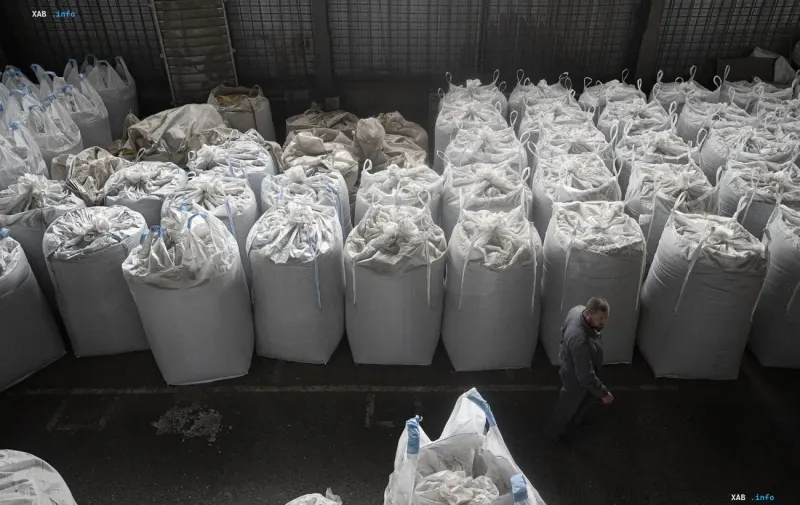
On 24 September, the Saeima of Latvia finally adopted amendments to the Law on the Circulation of Animal Feed, which urgently strengthen control over grain cargo from third countries transiting the republic's territory and its ports. The new provisions allow authorities to inspect cargo containing feed, take samples for laboratory analysis, and establish the actual origin of the product. This is reported by RBC-Ukraine, citing a publication by the Latvian outlet Delfi, as well as Latvian media press.lv and tvnet.lv.
Inspection mechanism and the role of the Food and Veterinary Service
Under the adopted amendments, the Government of Latvia is obliged to define the list of cargo subject to inspection and to approve the procedure for such inspections by the country's Food and Veterinary Service. The key novelty is that, previously, food-grade grain was not inspected to verify the authenticity of the declared geographical origin. Authorities now have a more flexible mechanism that allows them to identify cargo that may have an illegal origin, including grain exported from the occupied territories of Ukraine.
Reasons for tightening control
The need to urgently strengthen control arose after Latvian authorities received information about Ukrainian grain illegally exported from the occupied territories. Riga also takes into account the risk that such cargo may be transported with forged or substituted documents indicating a Russian origin of the product, including through Latvian ports. Latvia had previously introduced a ban on the import of Russian and Belarusian agricultural products and feed; however, transit cargo from third countries could pass through the country's territory and the EU without entering the European market, creating a "grey zone" for control.
Contradictory data
The provided sources contain a certain inconsistency in the scope of regulation. The title of the adopted law — "On the Circulation of Animal Feed" — formally limits the scope of the provisions to feed products. However, the text of the amendments and the authorities' comments refer to control over grain in general, including food-grade grain, which was previously not subject to verification of the authenticity of its geographical origin. In addition, the news context mentions the US Department of Agriculture's revision of its assessment of the Ukrainian grain market for the 2026/27 marketing year: the wheat production forecast has been raised, while the expected volume of Ukrainian grain exports has, conversely, been lowered compared to the previous estimate. This information has no direct connection to the Latvian legislative decision, but it underscores the overall tension in the global grain market and the growing interest in questions of product origin.
Broader context: transit and port logistics
Latvia, with its developed port infrastructure on the Baltic Sea, has historically been an important transit hub for grain cargo. The adopted amendments aim to close the gap that allowed cargo owners to use Latvian ports to move grain with substituted documents. The flexible inspection mechanism enshrined in the new provisions should allow the Food and Veterinary Service to respond promptly to suspicious consignments and carry out laboratory testing without the need for a prior court decision. The final sub-legal acts defining the specific list of controlled cargo and the inspection procedure are to be developed by the government in the near future.
Reaction and outlook
Latvian media, including press.lv and tvnet.lv, emphasize the urgency of adopting the amendments, noting that the decision was put on the Saeima's agenda for an extraordinary review. The Ukrainian side, in particular RBC-Ukraine and eurointegration.com.ua, views Riga's step as an important element of the international fight against the illegal export of grain from the occupied territories. It is expected that, after the sub-legal acts are approved, the inspection mechanism will be put into operation within the coming weeks, and its effectiveness will be monitored by both Latvian and European regulators.