
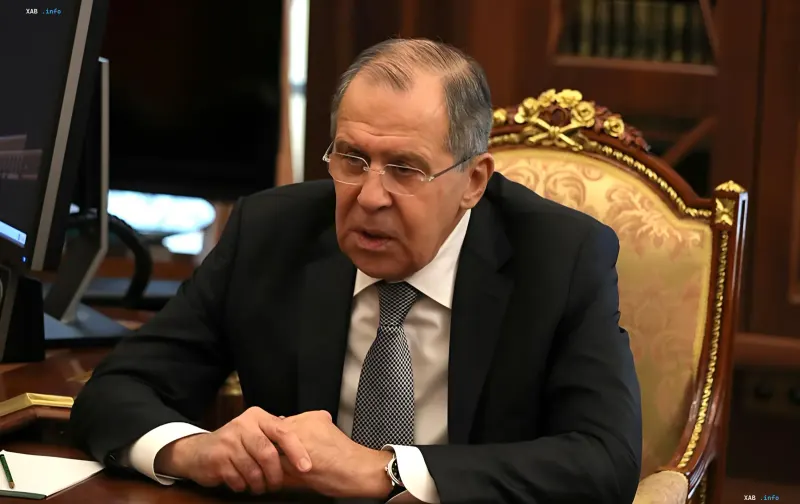
On the sidelines of the Eastern Economic Forum in Vladivostok, Russian Foreign Minister Sergey Lavrov announced that Russia would close all three branches of the German Goethe Institute on its territory. In his words, this decision would be a mirror response to Berlin's actions, which terminated the agreement governing the Russian House in the capital of the Federal Republic of Germany. "The Germans have a Goethe Institute branch here — in Moscow, in St. Petersburg, and in Yekaterinburg. Of course, they will be closed, after our cultural center was expelled from there. Otherwise we would not respect ourselves," the Russian Foreign Minister stated, emphasizing that Moscow is left with no alternative in this situation.
Timeline of Escalation: From Leipzig to Bonn
The trigger for the sharp escalation in cultural diplomacy was a drone attack on a Ukrainian An-124 transport aircraft at Leipzig airport, which took place in early August. On September 1, Germany officially accused Russia of a hybrid attack and adopted a package of countermeasures: the Russian consulate in Bonn was closed, and the agreement governing the Russian House in Berlin was terminated. According to reports, the investigation established that two suspects involved in organizing the incident were linked to Russia. It is precisely this sequence of events, by Moscow's logic, deprives Germany of the right to maintain its own cultural presence in the Russian Federation.
Contradictory Data
In the list of cities where Goethe Institute branches are located, Lavrov's statement contains a factual inaccuracy. The minister named Moscow, St. Petersburg, and Yekaterinburg. However, according to the institute's own data, its third branch in Russia is located not in Yekaterinburg but in Novosibirsk. Thus, both sides agree that three branches are at issue and that they will be fully closed, but they differ on the geographical list: the official position of the Russian Foreign Ministry points to Yekaterinburg, while the Goethe Institute's own information indicates Novosibirsk. This discrepancy does not affect the substance of the announced decision, but it is important for an accurate understanding of the scale and localization of the measures.
Assessment of the Consequences for the Cultural Bridge
According to Lavrov, the decision to close the Russian House meant that the German authorities consciously crossed a line signifying the end of Germany's cultural presence in Russia. The Russian Foreign Minister noted that this presence had been maintained "despite all the Ukrainian twists and turns" in Moscow's relations with the West, and now Moscow is responding symmetrically. The closure of three Goethe Institute branches effectively shuts down the last major institutional channel of German cultural policy on Russian territory, shifting bilateral relations into a plane of mutual "disconnection" of humanitarian institutions.
Context of Mirror Logic
The Russian side has consistently applied the principle of reciprocity: in response to the closure of the consulate in Bonn and the termination of the agreement on the Russian House, Moscow responds by eliminating German cultural venues in three cities. According to observers, such rhetoric and practice entrench a model in which cultural institutions become hostages to political incidents. For the German side, this means the loss of long-term language-teaching and cultural-exchange programs; for the Russian side, it means the formal end of the presence of one of the key Western cultural operators in the country.