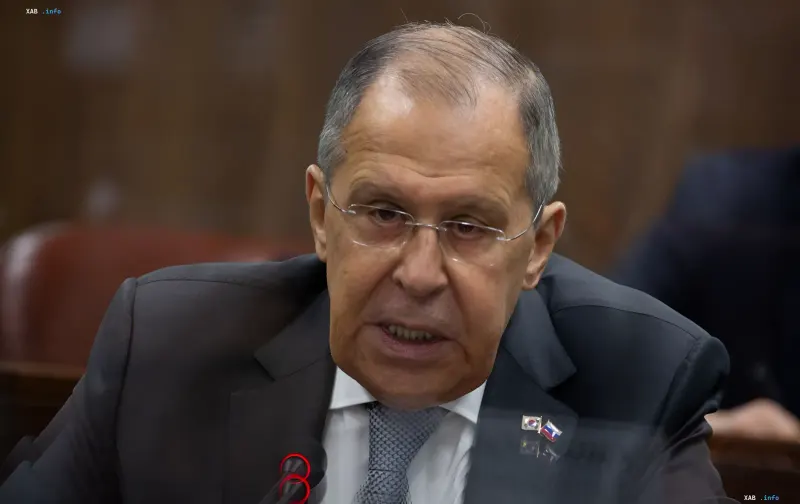
Russian Foreign Minister Sergey Lavrov stated that Moscow will not agree to the European Union's demands for an immediate ceasefire in Ukraine. According to him, Brussels' position boils down to giving the Kyiv regime time to recover from military losses. The statement came against the backdrop of the resumption of trilateral negotiations between Ukraine, the US, and Russia in Abu Dhabi, which, according to TASS, took place for the first time since February. This is reported by RBC-Ukraine, citing the Russian diplomat.
Brussels' 'Old Logic'
Lavrov emphasized that the Abu Dhabi talks, at the suggestion of the US, are dedicated to discussing the parameters of the future security architecture for Ukraine, Russia, and Europe. He called this a 'principled point' and contrasted it with the position of European capitals. 'Everything currently heard from Brussels and other EU capitals boils down to a demand to immediately cease fire,' the Russian Foreign Minister stated. Referring to European Commission President Ursula von der Leyen's words that there will be no discussions on security architecture until a sustainable truce is reached, Lavrov regarded this as 'old logic' — an attempt to buy time for 'the Kyiv regime's clients' to compensate for the military losses they have incurred. 'We will not agree to this,' he stressed.
Abu Dhabi: Return to the Trilateral Format
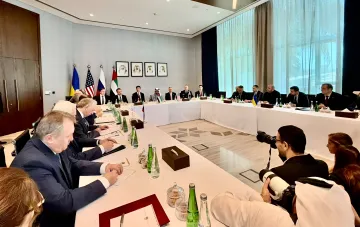
On November 10, trilateral negotiations between Ukraine, the US, and Russia resumed in Abu Dhabi for the first time since February. European representatives are not participating directly, instead holding separate consultations with Kyiv. Thus, the European side remains involved indirectly, while bilateral and multilateral contacts involving Washington remain the central track. It is in this context that Lavrov highlighted the divergence of positions: according to him, the US proposes discussing the security architecture, while the EU insists on the condition of a preliminary ceasefire.
Kyiv's Position and Divergence in Sequence
Kyiv has previously voiced its own assessments of the conflict's dynamics. President Volodymyr Zelenskyy stated that if Ukraine leaves Donbas, the aggressor state will take a pause and then return. This logic echoes Lavrov's argument that a truce without security guarantees will only give the adversary time to regroup. At the same time, the parties diverge on the sequence of steps: Brussels, according to von der Leyen, makes a sustainable truce a condition for discussing security architecture, whereas Moscow, according to Lavrov's statements, insists on the simultaneous discussion of these parameters and rejects the demand for an immediate ceasefire as an attempt to buy time.
Context and Prospects
Lavrov's statement highlights the persistent gap between Moscow and Brussels' positions on the key issue — the sequence of a ceasefire and security discussions. The resumption of the trilateral format in Abu Dhabi with US participation, but without direct European involvement, indicates that the negotiation process is developing along several parallel tracks. For future dynamics, it will be decisive whether an agreement can be reached on what serves as a condition for what: a ceasefire or security guarantees. As long as these positions remain mutually exclusive, the prospects for a quick settlement remain limited.