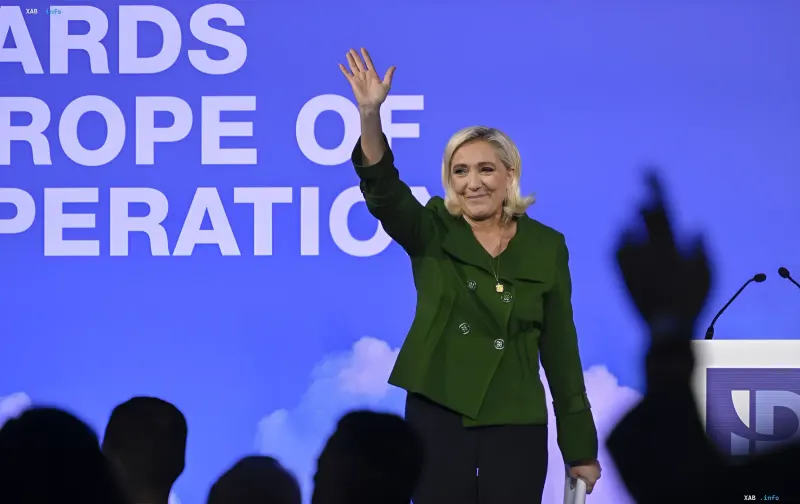
National Rally presidential candidate Marine Le Pen, in an interview with the IGR TV channel cited by RBC-Ukraine, expressed a number of harsh positions on the Ukrainian issue. In particular, she stated: "I categorically believe that Ukraine should not join the EU; Ukraine's future under no circumstances provides for EU membership." According to the publication, Le Pen currently leads in pre-election polls among the French, which gives her statements additional political weight in the context of the upcoming presidential elections.
Position on EU and NATO: Membership Not Envisaged
When asked whether Ukraine should join NATO, Le Pen stated that she does not think so, adding that the final decision on this issue, according to her, depends on peace talks. "I think all of this will be the subject of negotiations within the framework of the peace process, which is currently ongoing and does not seem to be progressing very much at the moment," she said. Thus, according to her wording, the issue of Kyiv's Euro-Atlantic integration is removed from unilateral decisions and tied to the outcome of the negotiation track.
Meeting with the Ukrainian Ambassador and the Idea of a Peace Conference
According to Le Pen, she met with the Ukrainian ambassador on Monday; RFI reports that this refers to a meeting in Paris with Ambassador Volodymyr Omelchenko held on November 16. Le Pen assured that during the meeting she expressed support for Ukraine and the Ukrainian people. At the same time, she proposed that France organize a comprehensive peace conference. She called the war itself murderous and its cause the actions of Russia, emphasizing that Ukraine has become a victim of this conflict.
Reaction to the Question About a War Criminal
To the host's direct question of whether she considers Vladimir Putin a war criminal, Le Pen answered sharply: "Such loud statements are truly ridiculous, and they contradict the need for peace. It is not through mutual insults that we find the means for peace." This wording was regarded by a number of publications as a refusal to publicly qualify the actions of the Russian leader and an emphasis on negotiation rhetoric.
Context: Germany's Plan and Mélenchon's Position
Against the backdrop of these statements, RBC-Ukraine recalls that Germany has developed a plan to support Ukraine in the event of a Le Pen victory in the elections. According to Politico, it will allow the European Union to allocate more than 100 billion euros to Kyiv, which the European Commission had already included in the draft seven-year budget, while the decision on borrowing for Ukraine will be made by a qualified majority. Simultaneously, La France Insoumise leader and presidential candidate Jean-Luc Mélenchon stated that his country will not fight against Russia: according to him, Ukraine's borders are not open to discussion, but if a peace agreement changes them, the final decision must be made by the people in a vote.
Together, these statements demonstrate that the Ukrainian topic has become one of the key electoral subjects of the French election campaign, where candidates' positions diverge significantly—from a categorical refusal of EU membership to mechanisms for financial support of Kyiv in the event of a change of power in Paris.