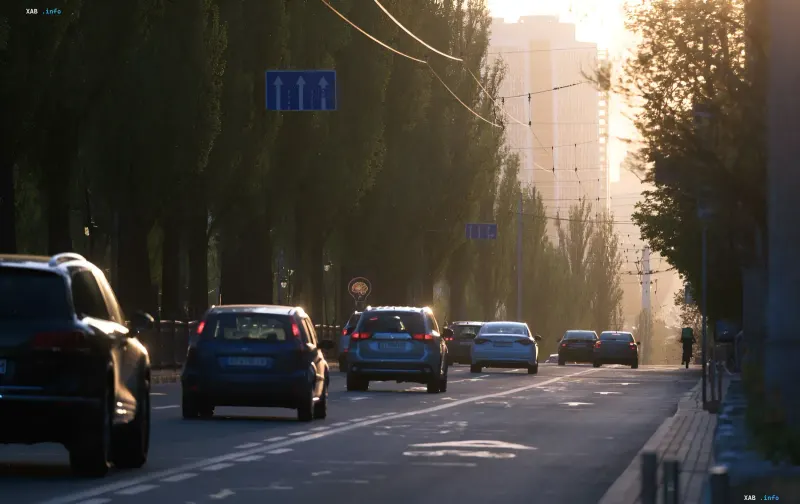
Many drivers are used to driving in the left lane without thinking about whether this complies with the rules. However, the Rules of the Road (RoR) clearly regulate when such movement is permissible and when it constitutes a violation.
When is it allowed to move into the left lane
According to Section 11.2 of the RoR, on roads with two or more lanes in one direction, drivers must drive as close as possible to the right edge of the carriageway. The left lane is intended for specific cases:
- Overtaking other vehicles;
- Bypassing obstacles;
- Preparing to turn left or make a U-turn.
Furthermore, Section 11.5 of the RoR permits moving into the far-left lane if the right lanes are occupied. It may also be used for stopping or parking on the left side on one-way roads within populated areas — provided this does not contradict other regulatory requirements.
Is there a fine for driving in the left lane?
Movement in the left lane itself is not prohibited. However, if a driver continues to drive in it unnecessarily, while the right lane is free and there are no grounds for such a maneuver, this may be considered a violation of the RoR.
There is no separate fine specifically for driving in the left lane in the legislation. However, if an inspector determines that the driver violated the requirements of Sections 11.2 or 11.5 of the RoR regarding the vehicle's position on the carriageway, such actions may be classified under Part 2 of Article 122 of the Code of Administrative Offenses.
Additional RoR clarifications
Previously, RBK-Ukraine reported that a yellow traffic light signal does not always mean a mandatory stop. If a driver cannot safely stop before the stop line without emergency braking, the rules allow continuing movement.
We have also explained whether drivers are obliged to yield to a bus leaving a stop, and how to correctly navigate an intersection if the traffic light is not working — to avoid RoR violations.