At the IFA 2026 consumer electronics show in Berlin, Lenovo unveiled two experimental laptops that demonstrate fundamentally new approaches to form factor and cooling. Project Swan and Project AeroBlade are not just marketing mockups — they are fully working prototypes built on current-generation components and ready to be shown in action. Both devices underscore Lenovo's strategic direction of adapting technologies previously showcased in gaming concepts for everyday office and professional use.
Project Swan: a Screen That Expands From 14 to 17 Inches at the Press of a Button
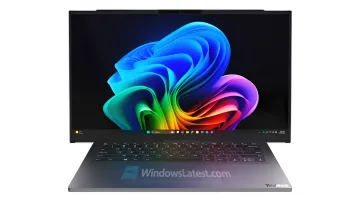
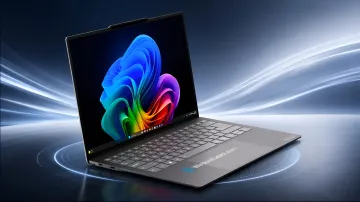
The star of Lenovo's stand was Project Swan — an ultrabook in a classic form factor, just 17.9 mm thin and weighing around 1.6 kg, capable of widening its display from 14 to 17 inches. The rollable screen mechanism is activated with a single button press: a flexible panel hidden inside the chassis smoothly unrolls, adding three extra inches of usable screen real estate to the user. In its collapsed state, the device is visually indistinguishable from an ordinary 14-inch laptop — the rollable panel is fully concealed, and the only visual trace is a barely noticeable crease in the deployment zone. By design, the extra space lets you comfortably fit two applications side by side — for example, a PDF document on the left and a text editor on the right — mimicking a full dual-monitor workstation without external displays. Among its other features are a large touchpad, a full-sized keyboard, a webcam, stereo speakers, and two USB-C ports.
Project AeroBlade: 10 mm and 800 Grams Thanks to Piezoelectric Cooling
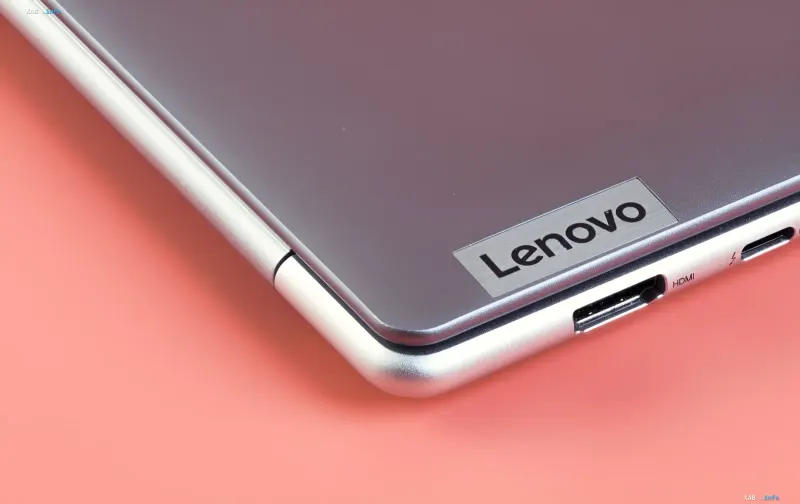
The second concept, Project AeroBlade, puts extreme reduction in size front and center. The chassis is just 10 mm thick and weighs 800 grams. The key to this is the abandonment of classic fans: instead, Lenovo integrated the AirJet solid-state cooling system developed by Frore Systems. The principle is based on the vibration of a piezoelectric membrane that generates a directed airflow without a single moving mechanical blade. Compared with traditional coolers, this system runs significantly quieter, consumes less power, accumulates virtually no dust, and is more reliable thanks to the absence of fragile rotating parts. Despite its experimental status, AeroBlade is a fully functional device: a magnesium-aluminum chassis, a bright OLED display, several Thunderbolt 4 ports, and support for the Wi-Fi 7 wireless standard make it suitable for real-world work scenarios.
From Gaming Concept to Office Reality: The Evolution of the Technology
The Swan project is a logical continuation of Lenovo's gaming concept from last year, which featured a stretchable screen ranging from 16 to 24 inches. In 2026, the company adapted the same rollable technology into a more compact and practical form factor aimed at a business audience. The shift from a "gaming" 24-inch monitor in a laptop to a 17-inch office display shows that Lenovo views flexible screens not as a niche curiosity but as a potential standard for productivity scenarios. At the same time, both concepts share a common engineering philosophy: maximum integration of innovative subsystems into a thin, light, and visually minimalist chassis.
Why These Are Still Only Concepts
Despite their impressive specifications and the fully working state of both prototypes, Lenovo has not announced any concrete plans for mass production of Project Swan or Project AeroBlade. The company explicitly points to two key obstacles for the mass market: the high cost of the AirJet technology, which cannot yet compete in price with traditional fans, and the technical complexity of assembling flexible display modules, which demands high precision and is still limited in production scale. As a result, both devices remain in the status of demonstration platforms, allowing Lenovo to test demand and refine manufacturing processes ahead of a potential launch of production versions.
Contradictory Data
Open sources show a minor inconsistency in terminology. A number of publications, notably itc.ua, use the "ThinkBook" branding in their headlines and descriptions of Project Swan, whereas in Lenovo's official materials and in most other sources the device appears exclusively under the concept name "Project Swan." This is likely preliminary positioning of the device within the ThinkBook lineup, but the manufacturer itself did not confirm a final commercial name at IFA 2026. In addition, the publication ura-inform.com mentions a "laptop price" in its headline, while the main materials and Lenovo's statements emphasize the absence of mass-production plans and, accordingly, the absence of an established retail price. Until official announcements appear, any price estimates remain speculative.