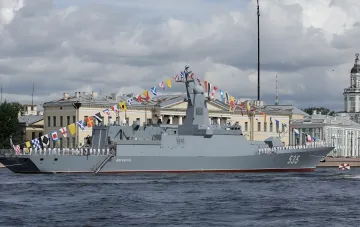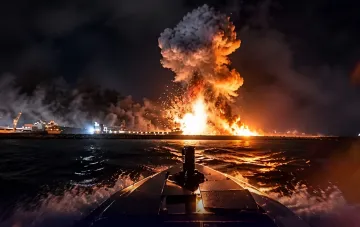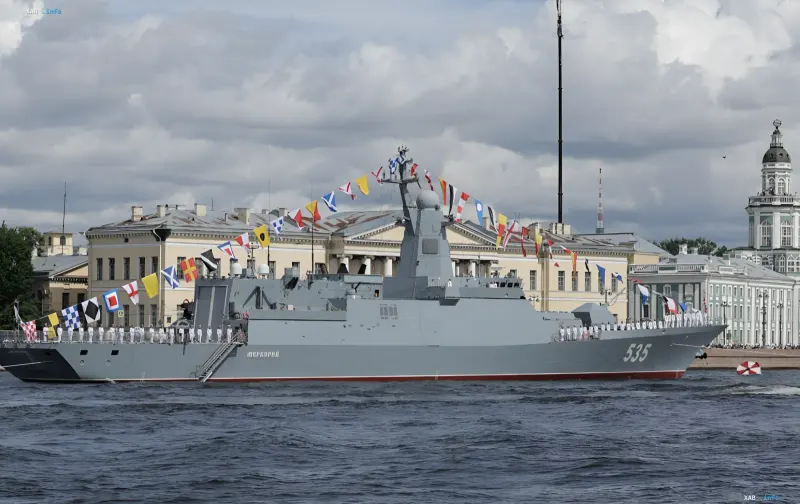
The Ministry of Foreign Affairs and International Cooperation of Libya has officially condemned any foreign military operations within its territory and territorial waters. The statement follows the incident on November 22 in the port of Benghazi, where, as confirmed by Kyiv, a Russian corvette, the 'Merkury', was struck. The Libyan Foreign Ministry emphasized that Russia's war against Ukraine does not grant either side the right to extend combat operations into Libyan territory, declaring that the country cannot be used as a ground for settling scores.
Call for Investigation and Diplomatic Solutions
Tripoli has urged Ukrainian authorities to officially explain the nature and scale of the announced operations. The ministry intends to verify all circumstances of the incident, including whether Libyan territory or facilities were used for the planning, execution, or logistics of the strike. Based on the investigation, Libya promises to take necessary diplomatic and legal actions. "Libya is not a party to the Russian-Ukrainian conflict, and involving it in this conflict under any pretext is unacceptable," the statement says.
Warning Against Illegal Military Presence
Separately, the Libyan Foreign Ministry addressed those who it says are making deals with foreign military forces by bypassing official authorities. The ministry stated that any entities acting unilaterally and entering into military agreements with external parties without the permission of competent authorities will be held responsible for the consequences, and such agreements cannot be considered the position of the state or its official obligations. The ministry also believes the country must rid itself of illegal foreign military presence, unify the military institution, and place all ports, facilities, and strategic structures under the authority of the state and its competent institutions.
Context: Two Authorities and Russian Presence
Following the civil war that ended in 2020, Libya effectively has two authorities. The west of the country is controlled by the UN-recognized Government of National Unity led by Abdulhamid Dbeibah, while the east is held by an administration supported by Khalifa Haftar's Libyan National Army. Russian naval ships are based precisely at naval facilities controlled by the Libyan National Army, and Benghazi is located in the east of the country. The Washington Institute for Near East Policy, in an analytical note dated October 6, had already expressed concern over the growth of Russia's military presence in Libya.
How the November 22 Operation Unfolded
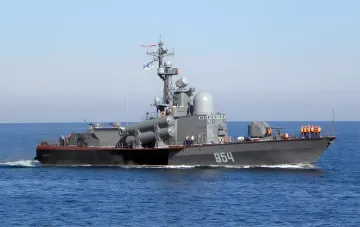
On November 22, explosions rocked the port of Benghazi, followed by the 'Merkury' corvette catching fire. Ukrainian President Volodymyr Zelenskyy confirmed the destruction of the corvette and reported that seven Ukrainian-made naval drones were used for the operation. The SBU clarified that it was a multi-purpose Project 20380 corvette assigned to the Black Sea Fleet; a Ka-27 helicopter on board also went down with it, and another strike hit the cargo ship MV ANGARA, which, according to the agency, Russia was using to transport military cargo. Later, analysts from the Institute for the Study of War (ISW), based on satellite imagery, reported that most of the ship had sunk. According to Al Jazeera, the corvette was transporting weapons and drones, and there were casualties among Libyan and Russian citizens; the exact death toll was not disclosed. The Kremlin reacted with restraint to the ship's destruction: official presidential spokesperson Dmitry Peskov stated that Moscow had "taken note" of Zelenskyy's statement and redirected questions about the attack to the Russian Ministry of Defense.