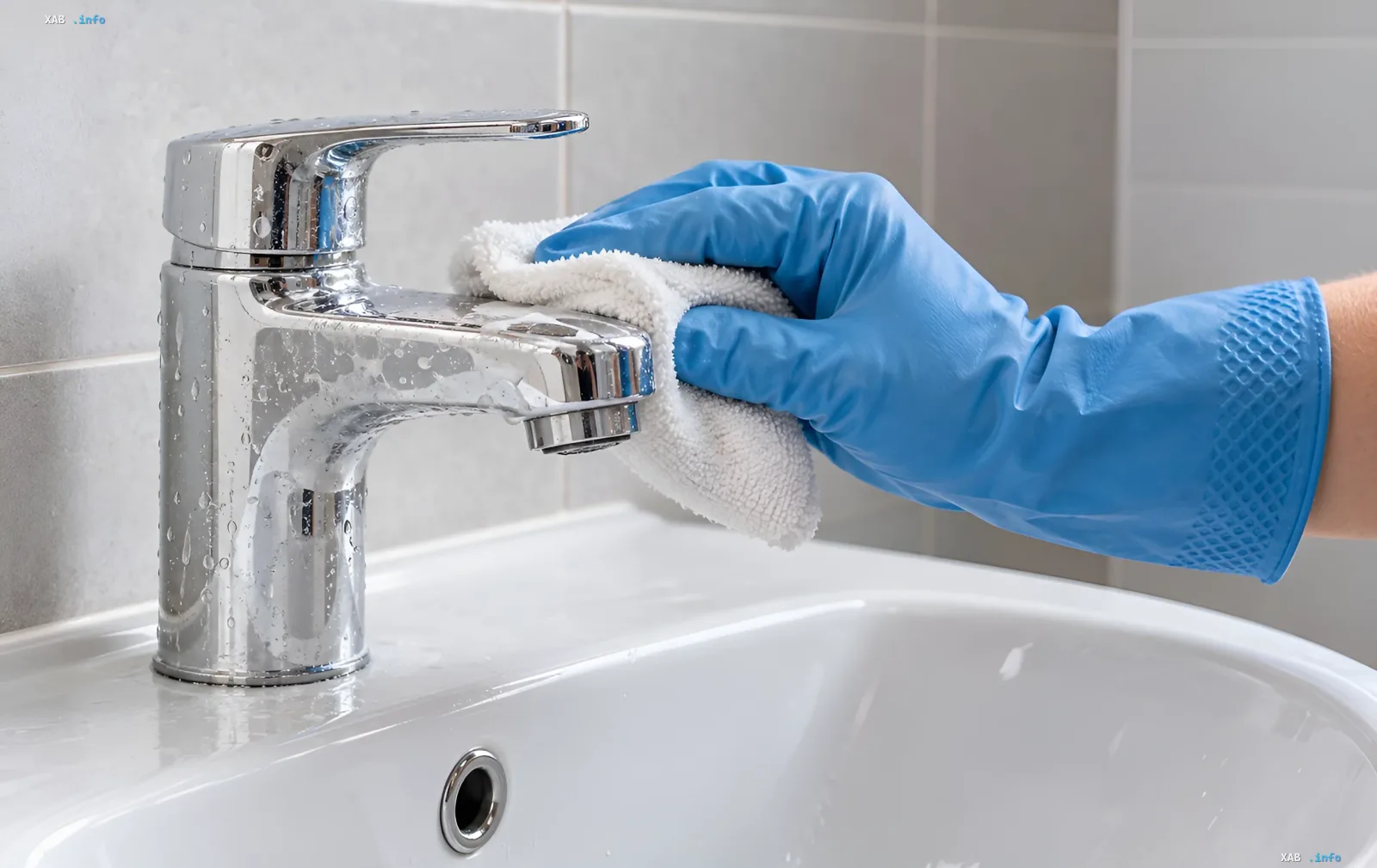
Combating limescale on plumbing fixtures, tiles, and acrylic surfaces requires extreme care and material knowledge. Attempts to scrub away white mineral deposits with abrasive metal sponges or aggressive universal cleaners often lead to disastrous consequences: micro-scratches form on surfaces, protective gloss wears off, and metal or enamel permanently loses its shine.
Mistakes When Cleaning Faucets and Brand Recommendations
As experts from Kärcher and leading plumbing manufacturers note, acidic compositions are used to remove stubborn mineral deposits, but strong acids can destroy metals, cement joints, and decorative coatings. For example, Hansgrohe explicitly recommends against using vinegar, chlorine bleach, abrasives, or microfiber cloths and stiff brushes on its faucets. Instead, experts advise using mild cleaners based on citric acid, applying them exclusively to a cotton cloth rather than directly onto the part, and strictly controlling exposure time.
Contradictory Data
While popular household tips on the internet often recommend radical express methods—such as leaving a concentrated acid solution or pure vinegar on the surface "overnight" for a quick fix in five minutes—professional plumbing and stone manufacturers strictly prohibit such practices. Experts warn that exceeding the exposure time of aggressive agents causes corrosion, reddish spots, and coating destruction, which is confirmed by the editorial team's personal experience with damaged faucets due to untimely rinsed cleaner.
Specifics of Caring for Acrylic, Porcelain Tile, and Natural Stone
Each material type dictates its own cleaning rules. KOHLER bathtub manufacturer reminds us that acrylic bowls should only be cleaned with soft cloths or sponges, avoiding abrasives that can damage the surface. In turn, Daltile warns against using acidic cleaners on polished porcelain and glazed porcelain tile to prevent dullness, spots, and surface damage. According to the Natural Stone Institute, acid-sensitive marble and limestone must not be cleaned with vinegar or citric acid—regular maintenance requires neutral stone cleaners or a mild dish soap solution with warm water.
Safety and Chemical Risks
It is strictly forbidden to mix different cleaning products together in an attempt to boost their effect. A combination of chlorine bleach with vinegar or other limescale removers poses a particular danger, as such a combination can release toxic and life-threatening gases. Thoroughly rinsing away chemical residues with clean water and following manufacturer instructions guarantees the longevity of your renovation and your personal safety.