Slow drainage in the shower cabin or complete pooling of water in the pan is one of the most common household problems faced by almost every apartment owner. According to Roto-Rooter, the most common cause of such a blockage is hair that gets caught near the drain opening or in the trap and mixes with soap scum, shampoo, and other body care products. However, hair is far from the only factor: dirt, mineral deposits, and small foreign objects, particularly hair ties, can also obstruct water flow. The problem can be located right at the drain grate or much deeper in the sewage pipe, requiring a different approach to elimination.
First Rule: Do Not Make the Situation Worse
Before grabbing tools, it is important to understand what must never be done. If a chemical drain cleaner has already been poured into the drain but water still will not go down, you should not bail out standing water, remove debris by hand, or use a plunger and snake. Caustic chemicals may still be present in the standing water, and any manipulation carries the risk of burns and splashing. Drano explicitly warns against using a plunger during and after using its product precisely because of the risk of splashing aggressive chemicals. If the clog is not resolved chemically, you must contact a plumber and be sure to tell them the name of the product used. A situation where wastewater backs up through the drain or other plumbing fixtures deserves special attention: in this case, you should immediately stop using the plumbing and call for professional help.
Step One: Manual Removal of Accessible Debris
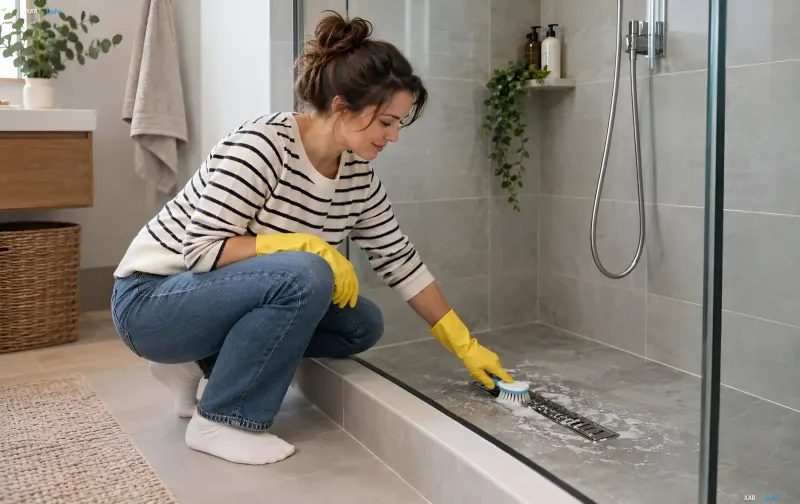
If no chemical products were used and there are no signs of sewage backup, start with the most obvious step. First, turn off the water. If there is water standing in the pan and preventing access to the drain, carefully remove a portion of it with a small container. Put on rubber gloves and check how the drain grate is secured: it may lift off manually or be held by screws—check the instructions for your specific model on how to open it. It is important not to pry off parts with force or unscrew the trap body connection to the pan or floor to avoid damaging the structure. Visible accumulations of hair and debris should be pulled out with a gloved hand or a special plastic drain-cleaning tool. It is strictly forbidden to push debris deeper—it must be removed and thrown into the trash can. If a removable filter or siphon insert is provided inside the drain, remove and wash only those parts that the manufacturer allows to be taken out for maintenance. For example, Geberit provides special hair-catching inserts in its shower drains. After cleaning, put all elements back in place and test the drain with a small amount of water: if it flows freely, no further cleaning is needed.
Steps Two and Three: Plunger and Manual Snake
If manual cleaning did not yield results, you can move on to a plunger. A model with a flat rubber cup is suitable for a shower drain. This method only works when the edges of the cup fit tightly against the surface around the opening and there is enough water to cover the edges. Make a few up-and-down motions while maintaining a tight seal, then check the drain. If the shape of the drain makes it impossible to press the plunger tightly, this method is impractical. The next option is a manual drain snake, which is appropriate when the blockage is inaccessible from above and the drain design allows such cleaning. As Mr. Rooter explains, the snake is carefully inserted into the open drain, rotated to catch the debris, and then extracted. You should work wearing safety glasses and gloves recommended by the tool manufacturer. Do not force the snake: resistance can occur not only from a blockage but also at a pipe bend. If the snake gets stuck, does not advance without significant effort, or you are unsure how to safely remove it, stop working and contact a plumber.
Common Mistakes and Myths About 'Home Remedies'
After mechanical cleaning, before turning the water back on, you must reinstall all removed inserts and seals in accordance with the manufacturer's instructions. Then turn on warm water in a small stream and observe its drainage: if the level in the pan or on the floor begins to rise, turn off the water immediately. It is important not to pour boiling water into the drain: according to Drainage Company Northwest, excessively hot water can deform plastic pipes and damage seals, and it is especially risky when water is draining poorly and lingering in the pipes. After mechanical cleaning, rinse the drain with warm water. Separately, the popular myth about baking soda and vinegar needs to be debunked. As Poison Control explains, mixing these substances does produce carbon dioxide, but it escapes through the open drain and usually does not create enough pressure to clear the blockage. Such a mixture does not guarantee the removal of stubborn debris. Finally, the American Cleaning Institute warns that combining various household cleaning products can cause dangerous chemical reactions. Do not add vinegar, soda, or other products if a chemical drain cleaner has already been poured into the drain.