Has water started draining slowly from your sink or stopped going down entirely? According to plumbing companies SparkFlow and NSP Plumbing, a routine household clog can turn into a serious problem if you misuse a plunger, damage a pipe connection, or carelessly disassemble the P-trap (siphon). In an apartment building, the consequences can affect not just your home but also residents floors below. Experts emphasize: before reaching for tools, you must clearly assess the scale of the problem and choose a method that won't make the situation worse.
Diagnosis: Where Exactly Is the Clog
The first and, according to SparkFlow experts, most crucial step is to figure out whether the issue affects only a single sink or if water is draining poorly from other plumbing fixtures as well. If water rises in the sink while the faucet is turned off, check whether appliances connected to the drain—such as a washing machine or dishwasher—are running. If water backs up from the sewer system or the issue occurs simultaneously in multiple locations, immediately stop using the plumbing and notify your building manager, HOA, or emergency plumbing service. Disassembling or clearing the main building sewer stack on your own is strictly discouraged; this is a job for certified professionals.
Mechanical Methods: Where to Start
NSP Plumbing recommends starting with simple mechanical methods that help resolve some household clogs without aggressive chemicals. If there is standing water in the sink, carefully bail it out into a small container—but only if chemical drain cleaners have not been poured into the drain beforehand. If such products were already used, do not attempt to remove the water or disassemble the trap yourself. Remove the accessible strainer or drain plug and check whether food scraps, hair, or other debris have accumulated underneath. Visible buildup can be removed while wearing gloves or with tweezers, without pushing it deeper into the pipe. For slow drainage caused by minor grease buildup, rinsing the drain with hot tap water is acceptable, provided the sink and pipe materials can handle that temperature. Boiling water should be avoided: high temperatures can damage gaskets, plastic connections, and individual plumbing components.
The Plunger: Rules for Safe Use
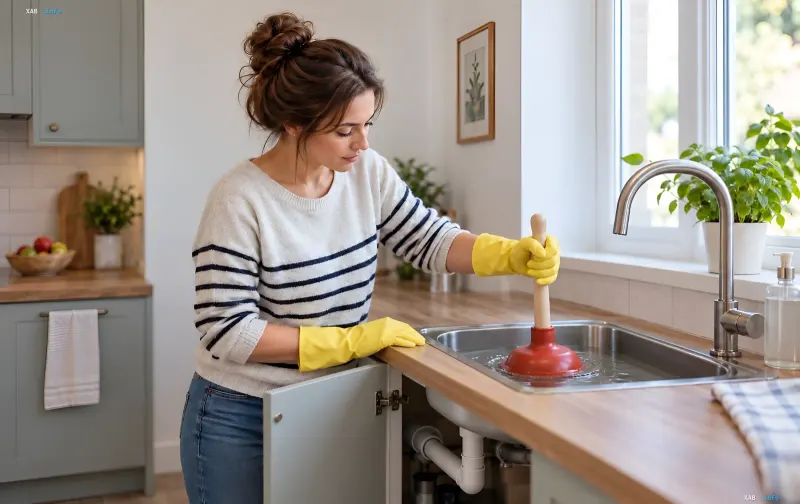
If the sink is completely filled with water, you do not need to add more. Before using a plunger, inspect the pipes under the sink: if the connections are loose, cracked, or already leaking, do not use a plunger. Specialists warn against using excessive force—if water appears under the sink or the pipes begin to shift, the procedure must be stopped immediately. Plumbing manufacturer Geberit specifically warns against using devices that create excessive pressure in pipes, as they can damage the trap and other elements of the drainage system.
The P-Trap (Siphon): When and How to Clean It
The trap is the component of the drainage system under the sink that holds a small amount of water, creating a water seal to prevent sewer odors from entering the room. Hair, grease, and small debris also accumulate here. Plumbing component manufacturer Oatey explains in its manual that improper gasket installation or overtightening connections can lead to leaks. You should only clean a removable trap yourself—a model with a lower removable part or slip nuts. Check the manufacturer's recommendations before starting. If the design is unfamiliar, connections are damaged, or you are unsure how to install gaskets correctly, call a plumber. A strict sequence must be followed: place dry paper towels under the trap, run a small amount of water after reassembly, and inspect the connection points. If everything is dry, gradually increase the flow. Even a few drops can indicate an improperly installed seal. Inspect the space under the sink again after the first use. If the leak cannot be resolved, do not use the sink.
Chemicals and Home Remedies: What Is Permissible
Not all popular home remedies are equally safe for plumbing. According to the American Association of Poison Control Centers, mixing different chemical drain cleaners can produce toxic compounds and cause chemical burns. Experts from UK Gas Plumbers, citing data published by Express, note that for many household clogs, soda crystals (sodium carbonate) are sufficient—a multi-purpose agent that effectively dissolves grease deposits without risking plastic pipes and gaskets. Nevertheless, no chemical or home remedy replaces mechanical cleaning for a severe clog, and if you suspect damaged connections, calling a plumber remains the only safe solution.