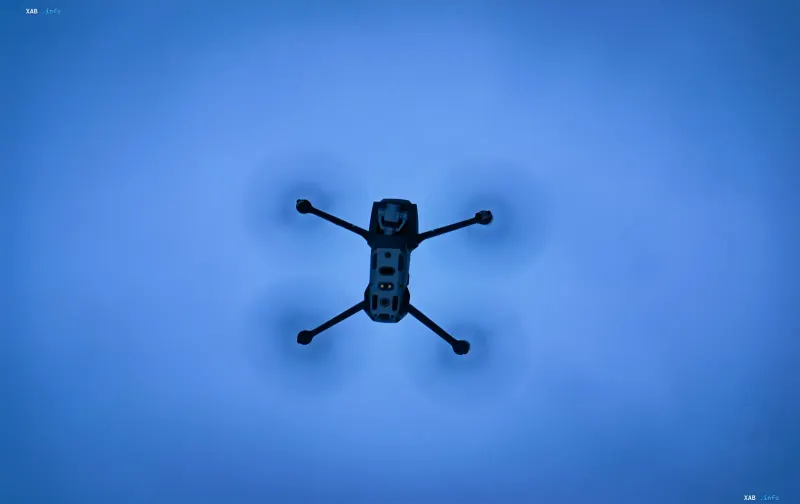
As low-altitude airspace becomes an area of increased vulnerability for critical infrastructure, Lockheed Martin, together with technology partners, has made a breakthrough in the field of national security. On August 13, 2026, it was announced that field trials of a new drone detection system called NetSense were successfully completed. The uniqueness of the development lies in the fact that it does not require the deployment of expensive specialized radars, but uses existing cellular network infrastructure of the 5G standard.
"Radio Frequency Echo" Technology
The Airspace Awareness-as-a-Service system (NetSense) works on the principle of passive radar detection. Instead of emitting its own signals, the algorithms analyze radio frequency distortions that arise in the air around cellular base stations. When a drone crosses the coverage area of a 5G network, it inevitably reflects and distorts signals intended for subscribers. The AI modules of the system recognize these micro-anomalies, allowing not only to record the fact of the object's appearance but also to continuously track it along the flight trajectory.
Alliance of Tech Giants
Implementing the project required combining the competencies of several industry leaders. Verizon Communications provided access to its 5G network spectrum, becoming the "physical body" of the system. Software for managing the Radio Access Network (AI-native RAN) was supplied by ODC. NVIDIA played a key role in data processing, using its AI Aerial platform to analyze radio signals in real-time. Additionally, Keysight Technologies joined the consortium, providing radio frequency modeling technologies, and Lockheed Martin itself took on the final data processing for precise target identification and tracking.
Successful Demonstration in Miami
The practical effectiveness of the system was proven during a demonstration in Miami. During the tests, NetSense successfully detected a drone flying within the network coverage area, instantly alerted operators to its appearance, and maintained control over the movement of the device. This proves that the technology is capable of working in real urban conditions where radio frequency noise density is at its maximum. For comparison, traditional air defense complexes often have difficulty detecting low-observable drones in urban environments.
Scaling Protection of Critical Infrastructure
NetSense offers a fundamentally different security model. Using the urban communication network allows for rapid scaling of protection over densely populated areas without the need to install thousands of new towers. The technology will become an additional security barrier for airports, power plants, stadiums, hospitals, and government facilities. According to developers, the main clients will be critical infrastructure operators and US agencies responsible for low-altitude airspace security.
Deployment Plans and Commercialization
The transition from demonstration to mass implementation is already planned. Pilot deployments of the system are expected in the second half of 2026 and early 2027. A full commercial launch, aimed at a wide range of customers, is scheduled for the course of 2027. This makes NetSense one of the most anticipated security systems in the field of counter-UAV operations this year.