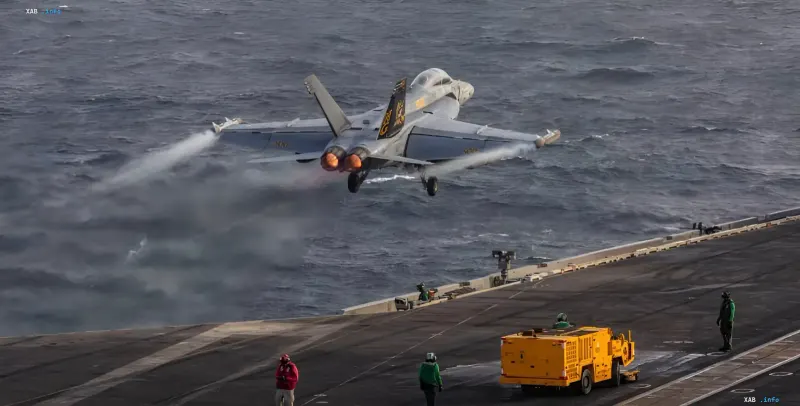
Amid a prolonged military confrontation with Iran lasting over six months, the Pentagon has been forced to conduct an emergency reorganization of forces in the Central Command area of responsibility. According to The Wall Street Journal, the aircraft carrier USS George Washington (CVN-73) is being urgently deployed to the Middle East to relieve the USS Abraham Lincoln (CVN-72). The Pentagon's official version describes this as a planned operation, however, an analysis of the facts points to critical resource depletion and a loss of combat readiness among the flagship's crew.
Anti-Record for Endurance and Humanitarian Crisis
The aircraft carrier USS Abraham Lincoln has been in the combat zone in the Arabian Sea for more than 250 days. Of this period, the ship spent over 200 days at sea without a single port call for scheduled maintenance and crew rotation. This is an absolute anti-record for the US Navy in modern history. Experts note that such operating periods without technical maintenance lead to critical wear and tear on life support and weapon systems.
According to data obtained from military families and confirmed by US senators, a humanitarian catastrophe has unfolded on board the ship. The failure of water supply and sewage systems, as well as a shortage of hygiene products and food, have led to a sharp deterioration in the sanitary and epidemiological situation. Reports indicate that the crew, numbering around 5,000 people, is experiencing extreme stress, which has led to an increase in psychological disorders and suicide attempts among the personnel.
Strategic Imbalance: Choosing Between Iran and China
The emergency deployment of the USS George Washington to the Middle East has far-reaching geopolitical consequences. The ship was urgently recalled from duty in the Indo-Pacific region, where it was carrying out containment tasks against the PRC. This decision effectively exposes the US Asian flank, demonstrating the Navy's inability to simultaneously maintain a high level of presence in two key conflict zones.
The situation indicates that the resources of the American fleet are exhausted by the prolonged blockade of Iran. The Pentagon is forced to choose between maintaining control over the Strait of Hormuz and containing Beijing, which testifies to a deep strategic crisis and a lack of sufficient combat-ready carrier groups.
Contradictory Data
There is a significant gap between the official position of the US administration and the actual situation, as reported by independent sources and senators. President Donald Trump and Defense Minister Pete Hegseth publicly deny the existence of critical problems, stating that service conditions are "normal" and the mission "is not lasting long." The Defense Minister accused the press of distorting facts.
However, senators, including Richard Blumenthal, are demanding immediate explanations from the Pentagon, citing documents confirming mass suicide attempts and the complete destruction of life support systems on the ship. While the White House insists on the planned nature of the rotation, the actual circumstances (250 days at sea, broken toilets, lack of food) indicate that the ship replacement has become a forced measure to prevent a total collapse of the crew.
Political Consequences and Personnel Issues
The scandal surrounding the service conditions on the USS Abraham Lincoln has provoked serious tension between the executive branch and Congress. Families of military personnel and veteran organizations are expressing fury over the administration's cynical attitude towards the fate of the sailors. Political pressure has forced the Pentagon to acknowledge the need for an urgent ship replacement, but not to admit the scale of the crisis.
This situation calls into question the effectiveness of managing military resources in the context of prolonged conflicts. If the problems with personnel and logistics are not solved systematically, the US Navy risks facing an inability to maintain a presence in key regions, which could lead to a loss of strategic advantage on the international stage.