In recent days, a radical change in the tactics of Russian military forces has been observed in the occupied territories. The security of logistical routes has noticeably intensified, indicating serious strain in the Russian army's supply system. Experts note that this is a direct consequence of the activation of strikes by the Ukrainian Defense Forces against the enemy's military infrastructure.
"Genius way" to draw away resources
Petr Andryushchenko, head of the Center for the Study of Occupation, commented on the situation in his Telegram channel, calling Ukraine's current tactic a "genius way" to draw Russian resources away from the front. According to him, the need to ensure the safety of transport forces Moscow to spend forces that could have been used in active combat operations.
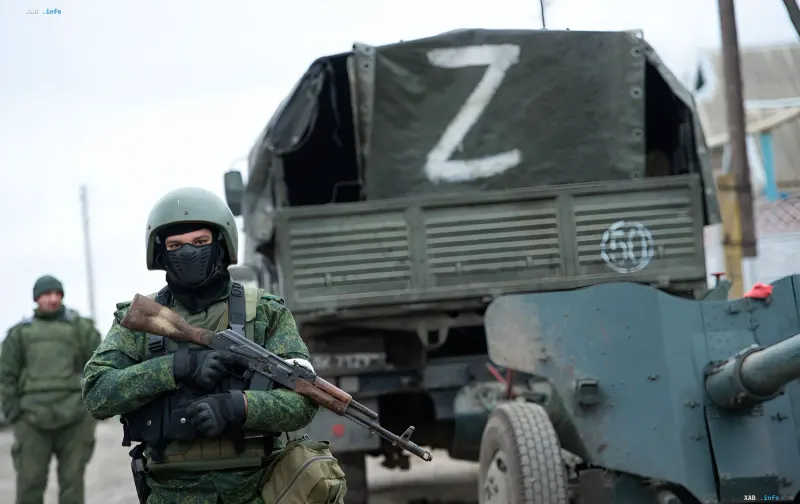
Currently, Russian military forces have switched to moving in dense convoys. Each such convoy, consisting mainly of five vehicles, including trucks, is accompanied by one to three mobile fire groups. This creates a colossal load on the enemy's personnel and equipment.
Mass movement of equipment and "mad resource"
According to Andryushchenko, only this week, in the direction of Donetsk, the movement of 30 to 50 trucks was recorded daily. Slightly less transport was heading towards Berdyansk. Special attention is paid to the security of tankers, which highlights the critical importance of fuel supply for the occupiers.
The situation in the area of the occupied Mariupol looks the most tense. According to the expert's calculations, at least 44 mobile fire groups were simultaneously involved in this sector. Andryushchenko summarizes such tactics as "mad resource with questionable effectiveness".
Chain reaction: strikes on logistics and economy
The need to allocate significant forces to escort convoys has become a direct response to a series of successful strikes by Ukrainian military forces. In recent days, the Ukrainian Defense Forces have intensified attacks on military logistics and military-economic objects on the territory of Russia.
On the night of July 23, a number of strategic targets were hit. In particular, a tanker in the Black Sea was hit, which, according to the General Staff, was used to transport oil and fuel for the needs of the Russian army. A pontoon crossing near Novoekonomichne in the Donetsk region, which served as a key hub for crossing personnel and equipment, was also attacked.
Counter-strikes deep into Russian territory
On the night of July 25, Ukrainian troops launched a new series of long-range strikes on objects on the territory of Russia. President Volodymyr Zelenskyy confirmed that the following were hit:
- An oil refinery in Tyumen;
- A logistics facility in Yekaterinburg;
- A trainload of fuel and lubricants in Rostov-on-Don;
- Vessels and a warship in the Caspian Sea area involved in the transport of military cargo.
These actions demonstrate Ukraine's ability to hit targets at a significant distance, forcing the enemy to reconsider its logistical schemes and spend resources on protecting the rear.