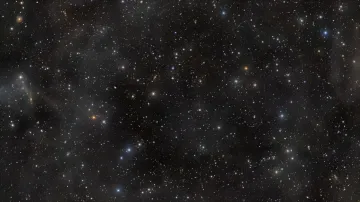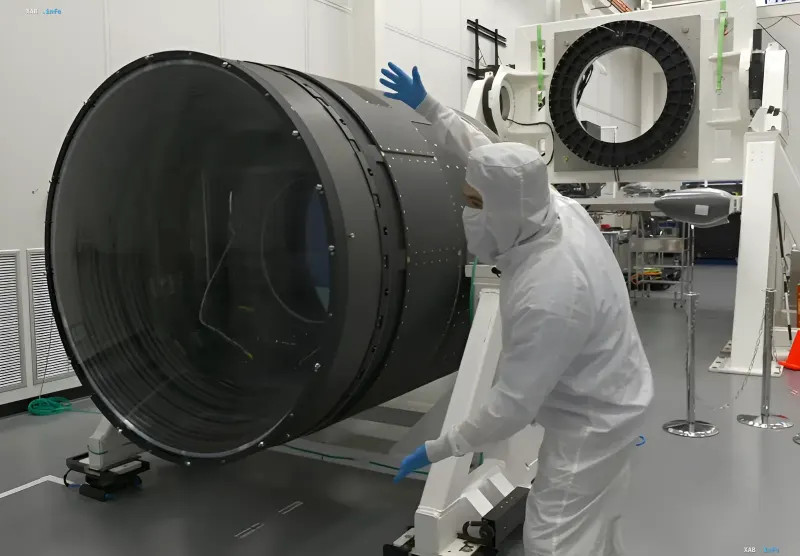
The Vera C. Rubin Observatory has demonstrated the capabilities of its latest 3200-megapixel LSST camera. The device produced an unprecedented image, combining data from hundreds of shots and containing more than half a million distant galaxies. This event marks the beginning of a massive mission that will last ten years.
A technical monster in the world of astronomy
The LSST camera is not just an enlarged lens. The huge image sensor consists of 189 individual CCD arrays, which are positioned with jewel-like precision on a single platform. The dimensions of the device are comparable to a small car, and its weight reaches 3000 kg. This monster of modern optics is mounted on the 8.4-meter Simonyi Survey Telescope.
During its mission, the camera will take 700 ultra-high-resolution images every night. This volume of data will allow scientists not only to record a static picture of the Universe but also to track changes in space over time.
A look at the COSMOS field
The demonstration image was created by combining the results of hundreds of observations. The captured section of the night sky is known to astronomers as COSMOS (Cosmic Evolution Survey Deep Field). This area is one of the most studied in space: from 2003 to 2005, it was the object of close attention from the Hubble Space Telescope.
The COSMOS field is accessible for observation both from Earth and from space. More than two million galaxies of all types and ages have already been identified in it, making this area a kind of cosmic laboratory. Thanks to the unprecedented resolution of the LSST camera, over the next ten years, scientists will add new data to this array, studying the evolution of galaxies.
Scale and prospects
To appreciate the scale of the resulting image, it is worth comparing it with the size of our galaxy. The visible edge of the Milky Way reaches 120,000 light-years in diameter, although taking dark matter into account, the total outer edge may be 1.9 million light-years. The LSST camera allows us to look far beyond our home.
Director of the Vera C. Rubin Observatory, Bob Blum, emphasized that the deep image of COSMOS is just the beginning of work in this region. Repeat shots, which will be taken in the coming years, will demonstrate the capabilities of the program to discover new objects. The scientific community will receive a huge amount of data on transient and variable objects, such as supernovae and other explosive transients, for subsequent detailed research.