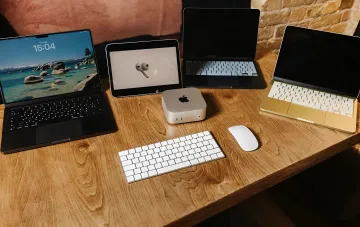
Corporate companies that regularly update their laptop fleets often face a paradox: devices purchased for millions remain technically functional and hold significant market value after three to five years of operation. However, this residual value is rarely considered during the planning stage of new procurement. According to the Residual Value Guide 2026, published by Apto Solutions, three-year-old MacBooks retain approximately 39% of their original cost on the secondary market. For large businesses replacing dozens or hundreds of devices annually, even a partial return on investment can fundamentally change the financial calculation of the next refresh cycle.
Lifecycle Economics: Why a More Expensive Laptop Is Not Always Costlier
The cost of corporate hardware is shaped throughout the entire period of use. The initial purchase price is compounded by maintenance, software licensing, potential repairs, and technical support. In contrast, at the end of the lifecycle, a company can recover a portion of the funds by selling the device. Apple MacBook is a prime example: the performance of Apple Silicon chips, energy efficiency, and long-term software support help these devices remain relevant for professional tasks, maintaining strong demand on the secondary market. At the same time, resale value depends on more than just the brand: two laptops of the same generation can differ significantly in price due to RAM capacity, battery health, chassis condition, and storage configuration.
Refresh Timing: When Delaying Sales Costs Money
Even if laptops remain technically functional after three to five years, continuing to use them is not always the most profitable solution. With the emergence of new equipment generations, previous models gradually lose market value, and delaying the sale can reduce the amount a company can recover. The economically optimal moment for an upgrade is determined not by the formal age of the equipment, but by comparing two scenarios: the costs of continued operation (including support and repairs) versus the cost of new equipment minus the potential return from the old ones. This calculation, rather than a calendar date, should be the basis for fleet replacement decisions.
Organizational Barriers: Why Selling a Hundred Laptops Is Harder Than One
Selling a single laptop is relatively easy. A batch of one hundred devices with various models, configurations, and technical conditions is a different matter. Companies must conduct inventory, determine the value of each unit, ensure secure corporate data erasure, find a buyer, prepare documentation, and organize pickup. This process involves IT specialists, procurement managers, accounting, and security teams—none of whom usually consider selling old hardware a primary task. This organizational burden is often why residual value remains unrealized, leading to devices being written off or sold for a negligible price.
B2B Trade-In as a Tool: The Corporate Buyback Model
The aforementioned processes can be outsourced to a specialized operator via a corporate buyback or B2B trade-in mechanism. In this model, the business transfers used equipment, while the buyer handles valuation, documentation, data erasure, and logistics. The company can allocate the resulting funds to future purchases or other needs. While buying new devices from the same vendor is not required, many organizations find it more convenient to combine the buyback of old equipment and the purchase of new hardware within a single process.
Breezy within ASBIS Group: The Ukrainian Experience
Breezy, an international company within the ASBIS Group, specializes in corporate buybacks and the resale of electronics, handling the acquisition, testing, refurbishment, and resale of equipment. Ukraine was one of the first markets where Breezy launched operations. Corporate buyback is not exclusive to IT companies: the service is designed for any business that manages a fleet of portable devices and requires a transparent mechanism for recovering residual value without imposing additional burdens on internal teams.