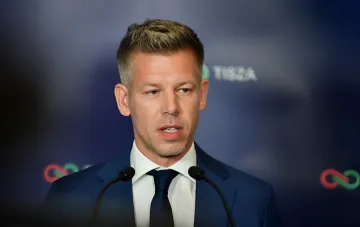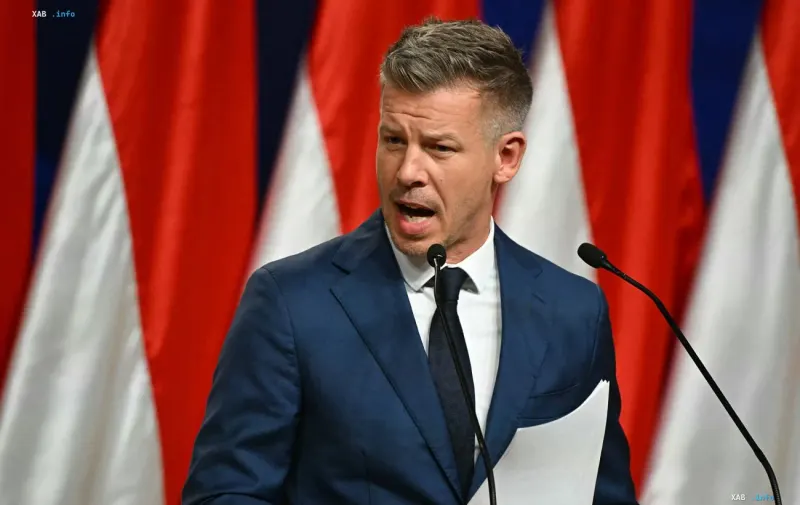
Ukraine invited Hungary to a new regional format called the "Carpathian Eight," but Budapest declined to participate and publicly explained the reason for this decision. RBC-Ukraine reports this, citing a post by Hungarian Prime Minister Péter Magyar on the social network X. According to the Hungarian prime minister, Kyiv had no grounds to name Hungary a participant in an international initiative without prior consultation with Budapest.
Context: What Is the "Carpathian Eight"
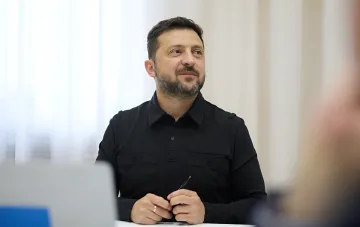
Ukrainian President Volodymyr Zelensky announced the creation of the new regional cooperation format on September 18, 2026. The "Carpathian Eight" was planned to bring together Ukraine and seven European countries — Romania, Serbia, Poland, Slovakia, Czechia, Austria, and Hungary — with the European Union's participation also envisaged. Thus, the initiative was conceived as a broad Carpathian integration project uniting the states of Eastern and Central Europe around a Ukrainian core.
Budapest's Reaction: The Village Football Analogy
Hungary, however, did not become a member of the format. To explain its position, Magyar drew a vivid analogy with a football team allegedly created in a neighboring village without the knowledge of a person who was immediately enrolled in its roster. "Hi, we've created a football team in the neighboring village. We don't know each other, but you're on it, and you need to bring a ball," the Hungarian prime minister wrote. He emphasized: "I'm trying to help you. Claiming that a sovereign state is a participant in an international initiative (Carpathian integration) without prior consultations or the consent of that state itself is absolutely unacceptable." In effect, Magyar thereby explained Budapest's refusal by stating that Hungary had, in his words, been included in the format without prior consent.
Contradictory Data
The public statements of the parties reveal a difference in how the incident is interpreted. On the one hand, in Zelensky's announcement Hungary appeared on the list of countries planned to be drawn into the "Carpathian Eight," which in the Ukrainian discourse was presented as an invitation to cooperate. On the other hand, Magyar had earlier formulated Budapest's position differently — stating that Hungary had received an invitation from Ukraine but had not accepted it, without specifying the reason for the refusal. The Hungarian Foreign Ministry's State Secretariat confirmed that the country had not joined the new format, but provided no further explanation. Moreover, according to Interfax, the prime minister's and foreign minister's reaction followed a statement by Sybiga, in which Hungary was, in essence, designated as part of the initiative. Thus, one side speaks of an "invitation," the other of "inclusion without consent," and the trigger for the public reaction was the specific rhetoric of the Ukrainian side, which creates a discrepancy in how Hungary's status in the project is interpreted.
Diplomatic Resonance
The incident received wide resonance in regional and European media: Euronews, in particular, characterized the situation as a clash between Hungary and Ukraine over Zelensky's new regional forum. For Kyiv, the refusal of one of the named participants weakens the declared "eight" and turns it into a format with a gap in its very name; for Budapest, the episode becomes an occasion to underscore the principle of sovereignty and the need for prior consultations on any integration initiatives. As of September 22, 2026, Hungary had officially not joined the "Carpathian Eight," and the further fate of the format without one of the key Carpathian states remains an open question.