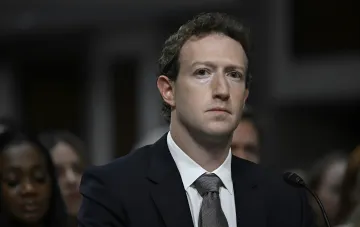
Meta CEO Mark Zuckerberg has sharply criticized initiatives to block Chinese artificial intelligence in the US. In his view, attempts to cut off access to advanced models from China in an effort to win the technological race will not yield the desired results. This was reported by the Financial Times.
Zuckerberg believes that restrictive measures are a dead end. Instead of trying to isolate the American market, companies should focus on identifying their own "bottlenecks" and systemic barriers hindering competition. According to the head of Meta, only internal optimization and development will allow the US to maintain its leadership.
A New Round of Debate: The Kimi K3 Model
The statement came against the backdrop of intensified discussions in Washington regarding restrictions on Chinese AI with open weights. The trigger for this new round of discussions was the release of the Kimi K3 model by Beijing-based company Moonshot AI.
Developers presented the novelty as the world's first open model of the 3T class. It boasts the following characteristics:
- 2.8 trillion parameters;
- native vision;
- a context window of 1 million tokens.
According to the creators' own estimates, Kimi K3 is surpassed only by proprietary market leaders — Claude Fable 5 and GPT 5.6 Sol.
Suspicions of Intellectual Property Theft
The success of the Chinese model has caused alarm in American political circles. Some officials and industry representatives suspect that Chinese laboratories may have used distillation methods to create competitive systems.
In July, Michael Kratsios, Director of the White House Office of Science and Technology Policy, directly accused Moonshot AI of using others' developments. In the same month, US Treasury Secretary Scott Bessent warned that authorities would begin checking Chinese open-source models for signs of intellectual property theft.
Bessent clarified that if facts of "hidden industrial distillation attacks" are confirmed, companies could face sanctions and be added to the list of export restrictions.
Alliance in Defense of Open Source
Zuckerberg's position did not remain isolated. It coincided with a massive campaign in defense of models with open weights. The Linux Foundation announced its joining of an open letter alongside industry giants: Cisco, Dell Technologies, IBM, Microsoft, and Nvidia.
The organization's statement emphasizes the importance of transparency for the security of the global economy:
"As AI integrates into the global economy, how can we ensure its safety, transparency, and reliability? At the Linux Foundation, we believe the answer lies in openness. Models with open weights give researchers and enterprises the necessary visibility to verify, audit, and eliminate vulnerabilities before they are exploited by bad actors".
Nvidia CEO Jensen Huang also supported this viewpoint. In an interview with Axios, he stated that high-quality Chinese open models must be used, not blocked. According to him, a campaign to ban them could harm the United States itself.
Control Mechanisms and Ethical Disputes
Despite resistance from the technology sector, the White House continues to form control mechanisms. In a June executive order, authorities tasked the development of a voluntary pre-screening system. Under this initiative, developers will be able to provide the government with access to frontier models for up to 30 days prior to their official release.
Parallel to regulatory disputes, discussions continue regarding the pace of AI development. In July, participants in a march in San Francisco demanded that OpenAI, Anthropic, and Google DeepMind coordinate a pause in training more powerful models, proposing to direct the freed resources toward safety issues. In the same month, former OpenAI researcher Daniel Kokotajlo proposed a radical step — slowing down the AI race until 2040.