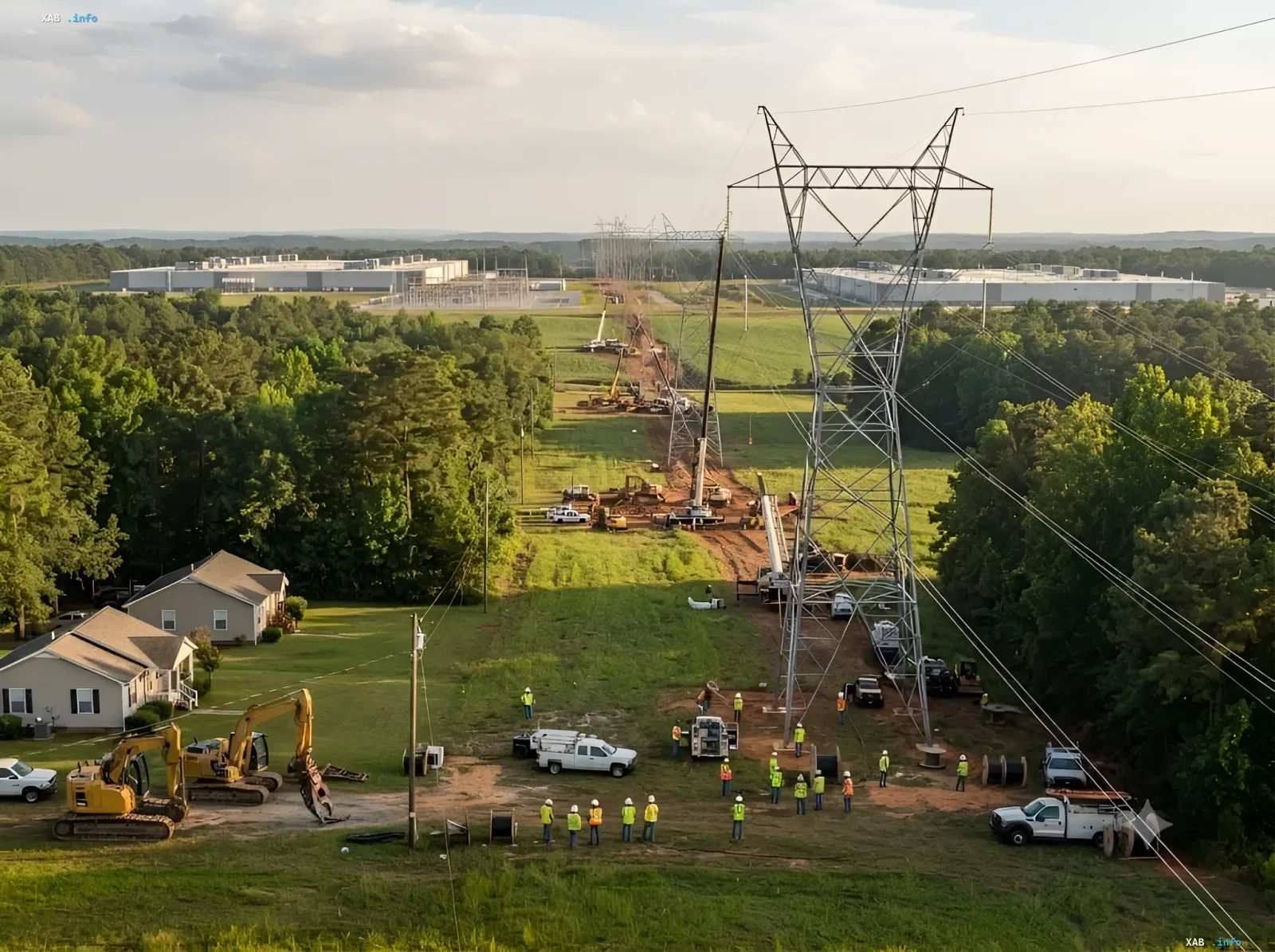
In Georgia, a massive landscape transformation is underway, set to become one of the most striking symbols of the new technological era. Energy company Georgia Power has launched the ambitious $16 billion Wansley project. The plan includes constructing a 35-mile (56 km) transmission line that will serve as the "lifeline" for a new wave of data centers. However, behind these grand investment figures lies a complex social reality: dozens of residential homes will be demolished to clear the route, and hundreds of land parcels will be taken from their owners.
The Infrastructure Hunger of AI
The large-scale earthworks and tower construction visible in Coweta and Fayette counties are just the tip of the iceberg. Approximately 80% of the new generating capacity created under this project is intended solely to ensure the uninterrupted operation of data centers. This infrastructure surge is directly dictated by the rapid boom in artificial intelligence.
Technology giants have moved from words to action, turning forecasts into real capital investment. A prime example is Meta, which, in its quarterly report, raised its capital expenditure forecast for 2026 to the $130–145 billion range. Company head Mark Zuckerberg stated that in the next five years, billions of people will gain access to personal AI agents capable of solving everyday tasks.
However, the drive for technological dominance comes at a price. Despite the company's revenue growing by 28% (to nearly $61 billion), Meta's free cash flow in the second quarter catastrophically dropped by 91%, falling to $784 million. These funds are being poured into creating physical infrastructure without which algorithms cannot function.
Energy Crisis and Rising Tariffs
Energy consumption by data centers is already exerting tangible pressure on the economy. In the PJM grid, covering the area from New Jersey to Illinois, the cost of reserving generating capacity for a single auction cycle has increased more than tenfold. This has led to a sharp spike in tariffs for industrial consumers: rates in Pennsylvania rose by 31%, in Ohio by 26%, while the national average growth was 7%.
Social Resistance and the Fight for Land
Network expansion is sparking fierce local resistance. Protests against data center construction have already taken place in 42 US states. Public pressure has been so strong that it has led to the cancellation or relocation of projects worth tens of billions of dollars.
In Georgia, the conflict is flaring up over compensation issues. Residents in the areas where the new transmission line will pass claim that Georgia Power's offers are approximately $100,000 below the market value of their property. The company, in turn, insists that the mechanism of eminent domain (forced land acquisition) is applied extremely rarely—less than 1% of land acquisition cases. Nevertheless, for those in the path of progress, the question of fair compensation becomes a matter of survival.