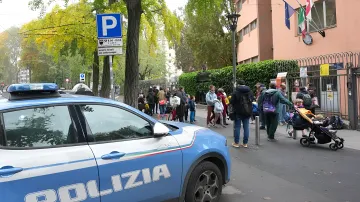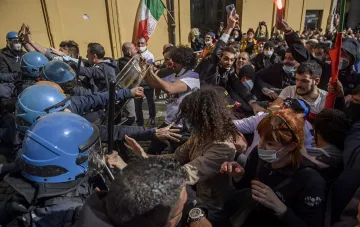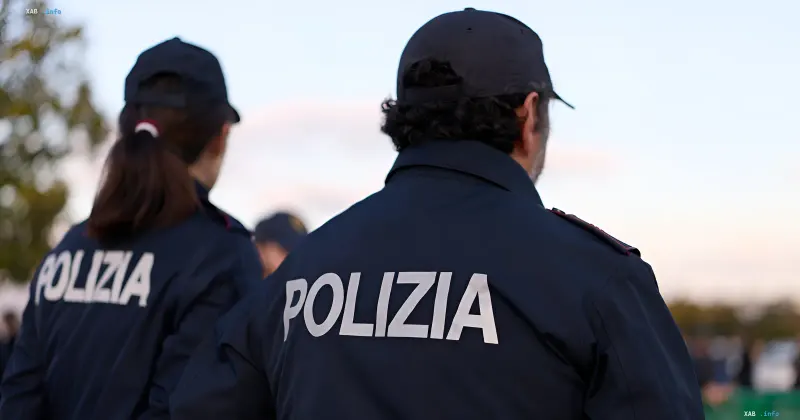
On Wednesday, approximately 6,300 schools in Italy were evacuated after receiving emails containing bomb threats. This is the latest in a series of incidents and cyberattacks targeting everyday infrastructure in Europe — from supermarkets and blood banks to air transport and broadcasters. Schools closed immediately after the warnings were received, and many parents left work to collect their children. According to a national security source, the emails were public and sending them "was as easy as drinking a glass of water."
Mass evacuation and parental reaction
The evacuation proceeded quickly but caused significant distress among students and families. "My daughter Daphne started crying because the children didn't understand what was happening, and when I picked her up, she was still shaken," said Nancy Bego, a parent of a student at the Maddalena Mazzini middle school in Rome. Another parent called the situation "very annoying," noting that "this is clearly a fake that disrupts lessons and ruins everyone's day." One Roman school informed parents via messaging app: "All students are in a safe area and remain under the supervision of the teaching staff."
"Mikhail Andropov" signature and threats against the Prime Minister
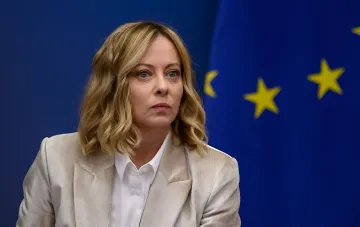
A copy of the message, reviewed by Reuters, was signed "Mikhail Andropov, leader of the Misogynistan Vilayat." The text also contained a threat against Italian Prime Minister Giorgia Meloni. The head of government stated that the bomb threats did not pose a danger and that the police and other state bodies were monitoring the situation. The same alleged author, according to reports, claimed responsibility for bomb threat emails sent to media outlets in Ireland and Bulgaria on Friday.
A wave of threats beyond Italy
Similar electronic threats from abroad were also received by many schools in Scotland, Northern Ireland, and Ireland, though the messages were classified as hoaxes and did not lead to class cancellations. In Ireland, local media reported that police also treated the recent threats as false alarms, although there were delays and evacuations in some schools. Thus, a single pattern of threats can be traced across several countries, indicating a centralized campaign.
Who is behind the campaign: conflicting theories
Attributing responsibility for the series of incidents remains a subject of dispute. A number of European officials suspect that Russia is behind the campaign to destabilize daily life in countries supporting Ukraine; Moscow denies this and accuses the West of a smear campaign. Iran also figures among the suspects: on Tuesday, France summoned the Iranian ambassador, accusing Tehran of a cyberattack that disabled refrigerators in hundreds of supermarkets last week. However, not all incidents are linked to foreign states.
Assessment by authorities and the school community
Italian Defense Minister Guido Crosetto stated that the Wednesday threats are part of a "clear strategy to sow fear and anxiety," but added that this is "not always the work of foreign states or hostile structures: there are those who seek attention, and madmen who at such times cannot wait to scare a city or region." The head of the Association of Italian School Principals, Antonello Giannelli, emphasized that the threats upset students, families, and staff, and even if they are clearly false, "one cannot underestimate the consequences of incidents that alarm entire school communities and disrupt normal learning activities."