Mass Protest on El Trampolín Beach
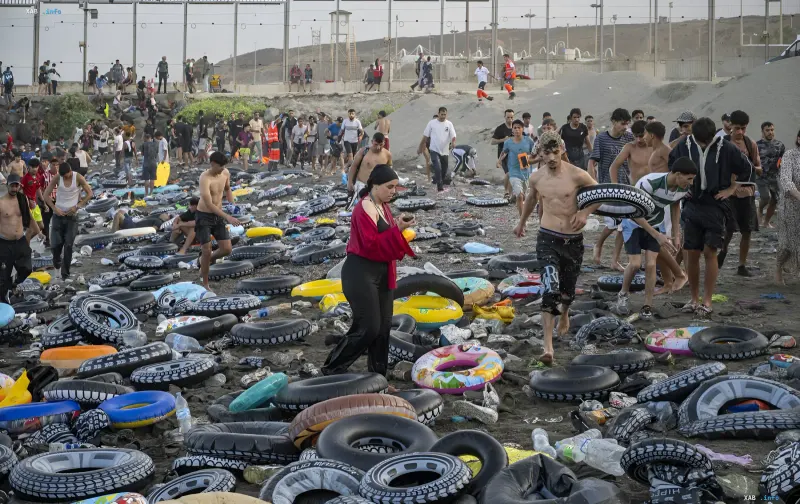
On August 16, 2026, a new wave of the migration crisis erupted in the Spanish enclave of Ceuta. Hundreds of migrants, stranded in the city following a mass border breach two weeks prior, staged a protest on the city beach. The crowd, comprising people of various nationalities but predominantly from Morocco, is demanding asylum from the authorities and refusing deportation back to Africa. Protesters chanted slogans such as "We are tired" and "We need a solution," waving Spanish flags and holding placards reading "We are human too" and "We do not want to return to Morocco."
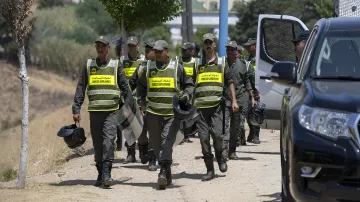
The beach, formerly a leisure spot, has transformed into a makeshift camp littered with trash and tires. Estimates suggest that between 5,000 and 8,000 people are currently stuck in Ceuta, unable to leave the enclave. Most are living in extremely harsh conditions, waiting for an opportunity to reach continental Europe or obtain official status. The situation is exacerbated by police blocking access to the city center, leaving migrants isolated on the outskirts.
Humanitarian Catastrophe and Healthcare Crisis
Living conditions in the camps on El Trampolín beach are described by migrants as unbearable. "We sleep by the sea, in the cold and amidst foul odors. We are suffering greatly," shared Ayoub Elarroud, a resident of Tetouan, Morocco. The lack of basic sanitation has led to outbreaks of infectious diseases. Enrique Roviralta, head of the Ceuta Medical Council, reported a rise in cases of infectious diarrhea and scabies, as well as a significant increase in injuries resulting from violence—ranging from fractures to stab wounds.
Local medical services are at their limit. Roviralta criticized the central government for its slow response to the crisis, stating that the number of medical staff in the city is disproportionate to the scale of the problem. In response, the Spanish Ministry of Health, represented by Monica Garcia, rejected claims of a total collapse of the healthcare system but acknowledged that services are under colossal pressure.
Government Stance and Causes of Migration
Spanish authorities have adopted a hardline stance towards illegal migrants. Interior Minister Fernando Grande-Marlaska stated that those who entered the enclave would not be allowed to stay in Ceuta, travel to mainland Spain, or obtain legal status, except in rare cases involving extreme vulnerability. This decision sparked a sharp reaction among the stranded individuals, many of whom are skilled professionals forced to leave their homeland due to economic hardships.
Mohammed Wanzar, a 39-year-old automation specialist from Fez, explained that the average salary in Morocco (around $324) does not allow him to provide a decent life, buy a home, or start a family. "The moment I stepped on Spanish soil, I felt as though I was born again. I would rather die than return," he declared. Such stories are repeated by hundreds of migrants who see Spain as their only chance for survival.
Contradictory Data
There are disagreements regarding the exact number of people stranded in Ceuta and the assessment of the infrastructure's condition. Local authorities and healthcare representatives speak of critical load and the risk of epidemics, while the central government attempts to portray the situation as controlled, albeit complex. Furthermore, estimates of the number of migrants vary: some sources cite a figure of 5,000, while others put it at up to 8,000 people. There is also no consensus on exactly how many of those who breached the border two weeks ago (approximately 60,000 people) remain in the enclave versus how many have already been deported or relocated.