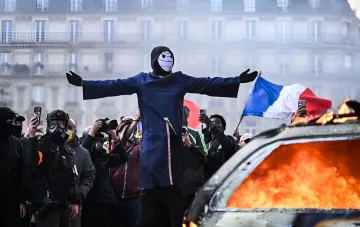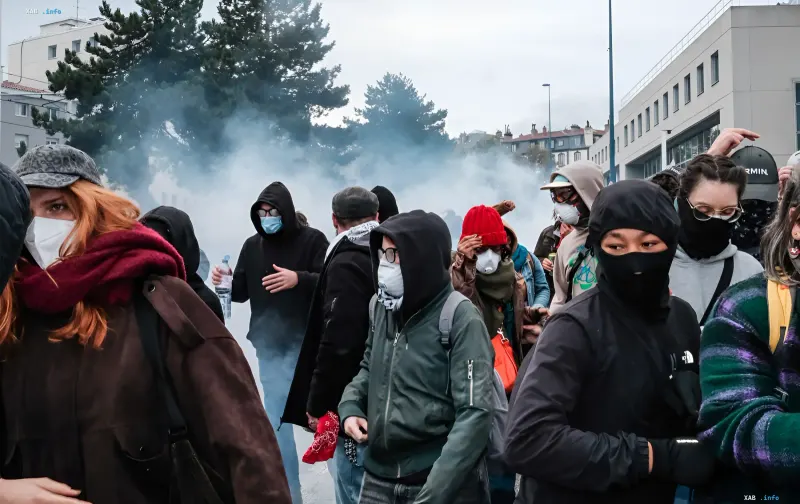
France has been hit by new mass protests triggered by rising prices and a declining standard of living. According to authorities, around 70,000 police officers and gendarmes were mobilized nationwide to maintain public order. In Paris, 16 metro stations were temporarily closed during the marches, while Bordeaux introduced nighttime movement restrictions for minors. Trade unions, student associations, and members of the "yellow vests" movement joined the demonstrations, turning the rallies into some of the largest the country has seen recently.
Large-scale Security Reinforcements
Ahead of the protests, French Interior Minister Gérald Darmanin announced a massive beefing up of security measures. To safeguard public order, authorities deployed 110 mobile units, 25 special armored vehicles, as well as water cannons, helicopters, and drones. This level of preparation by security forces indicates that authorities anticipated a tense scenario and allocated resources in advance to manage potential clashes.
Who Took to the Streets and What Do They Demand
The main goal of the protests, according to organizers, is to achieve a reduction in the financial burden on the population, an increase in purchasing power, and higher wages. Student and youth organizations also participating in the demonstrations are calling for better learning conditions and increased funding for the education sector. Thus, the protest united several social groups with partially overlapping yet distinct demands.
The Course of Marches in Paris
In the capital, trade unions organized an official demonstration: participants marched from Republic Square to Nation Square along Voltaire Boulevard, with the march starting after 2:00 PM. Representatives of the "yellow vests" movement decided not to join the trade union column and held separate actions. Supporters of the movement were urged to gather at Place de la Concorde, near the National Assembly; despite a police ban, about 100 people gathered there around 2:00 PM, some staging a sit-in protest while law enforcement checked the documents of those present. According to French media, movement organizers also announced a series of demonstrations in other regions of the country.
Discrepancies in Participant Numbers
The parties evaluate the scale of the protests differently. Trade unions claim that around 250,000 people took to the streets, while the Interior Ministry reports 146,000 demonstrators. Both sides acknowledge that mass marches took place, but their numerical estimates diverge significantly, which is typical for such actions and usually linked to different calculation methodologies.
Context and Background
The current actions continue a broader wave of protest activity in Europe: large-scale protests in Germany and their consequences were reported earlier, while previous protests in France had already escalated into clashes. Against this backdrop, the current demonstration uniting trade unions, students, and "yellow vests" has become another test for the authorities, who are forced to balance dialogue with protesters and tough measures to maintain order.