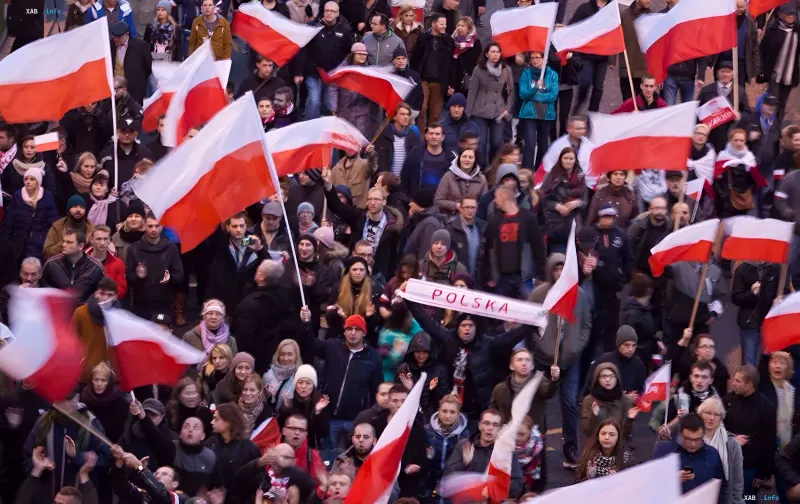
August 10, 2026 marks a massive wave of civil solidarity in Poland. Mass protests organized by the Committee for the Defense of Democracy (KOD) took place in 22 cities across the country, including Warsaw, Krakow, Gdansk, and Poznan. Participants took to the streets with the slogan "Do not be indifferent," demanding an end to the rise in violence and hate speech against Ukrainians and other minorities.
Response to a wave of xenophobia
The rallies were a direct public response to a series of high-profile attacks recorded in recent months. Among the most shocking incidents were a beating with a baseball bat in Wroclaw, an attack on two Ukrainian citizens in Gliwice, and verbal abuse of children on a bus in Bielsko-Biala. In the first half of 2026 alone, hate crimes in Poland increased by more than 30%, which experts believe is directly linked to aggressive rhetoric on social media.
A symbol of protection and solidarity
The organizers of the rallies devised a simple but effective support mechanism. Participants are distributing stickers with the call "Do not be indifferent," which are encouraged to be placed on the doors of shops, cafes, and cars. This visual marker is intended to signal to Ukrainians that in places with such a sticker, they can expect protection and assistance in case of threat. The initiative aims to create a network of safe zones throughout the country.
Demands to the government
The movement is not limited to street slogans. Earlier, on Friday, an action titled "My Poland does not hit, does not insult, does not incite" took place in Warsaw, during which a petition demanding strict measures to protect foreigners was handed over to the Office of the Prime Minister and the Ministry of Interior. The document was signed by more than 11,000 people. Activists insist that the state must take responsibility for the safety of citizens subject to discrimination based on language or appearance.
Contradictory data
While law enforcement statistics record a 30% rise in crimes, there are discrepancies in the interpretation of the causes of this phenomenon. On the one hand, human rights defenders and sociologists from the University of Warsaw point to a direct correlation between the rise of hate speech on social media and real attacks. On the other hand, official government representatives state that the rise in statistics is explained by more careful recording of incidents and a change in crime classification, rather than a real surge in violence. Nevertheless, the public resonance from recent incidents, including the attack in Krakow on August 5, has forced the authorities to intensify investigations.