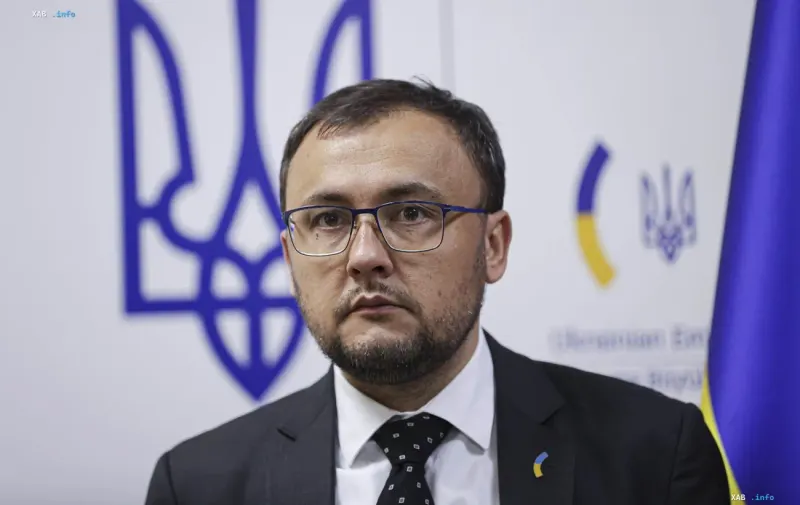
Ukraine's diplomatic corps has recorded an alarming trend in Poland: the number of attacks and acts of aggression against Ukrainian citizens has grown by roughly 30 percent over three years. This was stated by Ukraine's Ambassador to Poland, Vasyl Bondar, in an interview with RBC-Ukraine, citing Polish police statistics. According to him, 267 cases were recorded in 2024, 275 in 2025, and already 180 in the first half of 2026. "So, we are indeed seeing a growth of about 30 percent," the diplomat emphasized.
Figures from police and prosecution statistics
The data cited, as clarified by the ambassador, reflect crimes and offenses committed on national grounds. The Polish prosecution, in turn, is recording 182 pre-trial proceedings for precisely such crimes that have been ongoing from January to June 2026. Thus, the growth is confirmed by two independent sources — the police and the prosecution — which makes the trend less dependent on the methodology of a single agency.
How the classification of offenses is changing
At the same time, Bondar cautioned against a simplistic reading of the figures: the indicators must be interpreted in light of changing legislation and classification practices. Actions that could previously have been treated as ordinary hooliganism or insult are now more often classified with consideration of a motive of hatred on national grounds. This carries stricter legal liability, but it also affects the statistical series themselves — part of the "growth" may be the result of reclassification rather than solely an increase in the number of actual incidents.
Contradictory data
It is appropriate here to honestly present two viewpoints. On the one hand, the ambassador directly confirms a real growth in aggression on national grounds and supports this with specific high-profile incidents of recent times. On the other — he himself notes that part of the increase in the statistics is explained by a change in accounting practices: what previously did not fall into the "national" category is now included in it. Moreover, the phrasing "over three years" does not quite match the series of figures provided (two full years — 2024 and 2025 — plus the first half of 2026), which leaves room for different interpretations of the rate of growth. Both versions — real growth and the statistical artifact of reclassification — coexist within a single statement by the source.
Specific incidents and the authorities' reaction
The trend is illustrated by recent high-profile cases. On August 14, in a park near the railway station in Bydgoszcz, two adults — a man and a woman — got into a conflict with a 14-year-old Ukrainian girl and her 12-year-old brother; according to preliminary data, the cause of the aggression was the Ukrainian language in which the children were communicating. The attackers insulted the children with obscene language, threatened them on the basis of their national origin, and used physical force. The incident received wide publicity; it was reacted to by the Prime Minister of Poland, Donald Tusk, who condemned the attack on the children and stated that such behavior is unacceptable. On August 5, in Krakow, a man threatened two Ukrainians and struck a woman in the face; the police opened an investigation, and the Consulate General of Ukraine condemned the incident and called for not ignoring cases of aggression.
Public resonance and protests
The ambassador noted that such manifestations of aggression become especially visible in public space, since victims and witnesses often publish video recordings on social networks. This, on the one hand, heightens the sense of danger among other citizens, while on the other — it contributes to public awareness and prompts competent authorities to react faster. Against the backdrop of a series of incidents, mass actions under the slogan "Don't Be Indifferent" were held in 22 Polish cities: participants demanded that the authorities take stricter measures to protect foreigners from violence. Thus, the issue goes beyond individual offenses and becomes a subject of public discussion about the safety of the Ukrainian community in Poland.