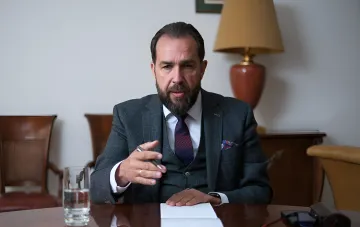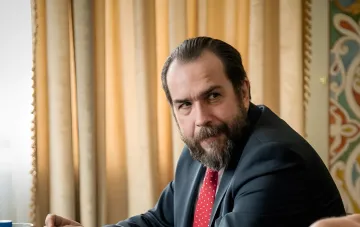
In an interview with RBC-Ukraine published on September 25, 2026, Ukraine's Ambassador to Poland, Vasyl Bondar, stated that public narratives about the danger of Ukrainian citizens staying on Polish territory are substantially exaggerated. According to him, the overwhelming majority of Ukrainians he personally interacts with do not encounter any manifestations of physical aggression. "For the most part, it is about anxiety caused by media reports, psychological pressure that also makes some citizens afraid to speak Ukrainian in public places," the diplomat emphasized. He added that Ukrainian, and sometimes Russian, is still frequently heard on the streets of Warsaw and other Polish cities, and that there are currently no systemic grounds for a mass departure from the country.
Crime Statistics and Legal Differences
Bondar cited specific figures: in the first half of 2026, 10,800 offenses involving Ukrainian citizens were recorded in Poland. Given the total number of Ukrainian residents of around two million, this rate amounts to about 0.54%, or roughly five cases per thousand people — a value the ambassador characterizes as being "within the margin of statistical error." At the same time, he drew attention to a fundamental difference in the legal classification of similar acts in the two countries: in Ukraine, driving a vehicle while intoxicated or possessing a small amount of narcotics without intent to sell are administrative offenses, whereas in Poland the same acts carry criminal liability. "Raw figures without an analysis of the nature of the offenses do not provide grounds for direct comparison," the diplomat noted, adding that some political forces attempt to use this statistics without explaining its actual content.
Contradictory Data
In the same interview, Bondar acknowledged that over three years the number of attacks on Ukrainians in Poland has risen by 30%. The publication "Korrespondent," in an article dated September 25, 2026, recorded 180 cases of aggression against Ukrainians in the first half of the year. Thus, an obvious tension arises between two of the ambassador's theses: on the one hand, he claims that the anxiety is "exaggerated" and that most citizens do not personally encounter violence; on the other, he notes a quantitative increase in incidents by a third over three years. The source korrespondent.net interprets these data as confirmation of a deteriorating situation, whereas Bondar himself regards the 180 cases as a statistically insignificant figure against the backdrop of a two-million-strong community. The misreading stems from the fact that the ambassador operates with the total number of offenses (10,800), including everyday and administrative episodes, while the media narrative focuses on the narrow category of physical attacks specifically.
Call to Observe Norms and Responsibility for Behavior
The diplomat emphasized that no sense of discomfort can serve as a justification for insults, discrimination, or physical aggression against Ukrainian citizens, and it would be wrong to shift responsibility for individual crimes onto the entire Polish society. As an example of solidarity, he cited the "Warmth from Poland to Kyiv" campaign held last winter. At the same time, Bondar addressed Ukrainian citizens themselves: "From the first days of my stay in Poland as ambassador, I have repeatedly appealed to our citizens — both to those who live here and to those who pass through Polish territory: observe the norms and rules, as well as the traditions of the host country. The behavior of each of us affects the attitude toward the entire Ukrainian community." He also suggested that part of the negative reaction from local residents may be linked to the fact that visitors from the regions, finding themselves in the capital, hear a language that is not their own on the streets, which "may evoke various emotions that can also turn into aggressive behavior."
Dynamics of the Number of Ukrainians Under Temporary Protection
Separately, in the context of the interview, it is mentioned that the number of Ukrainians under temporary protection in Poland has decreased by approximately 40,000 over the past six months. The ambassador clarified that this does not necessarily mean a mass departure from the country: some citizens may change their status, obtain a residence permit, or simply fail to renew their registration. Nevertheless, the trend toward a shrinking formally registered contingent against the backdrop of the ongoing war in Ukraine remains a subject of close attention by both Polish and Ukrainian authorities.