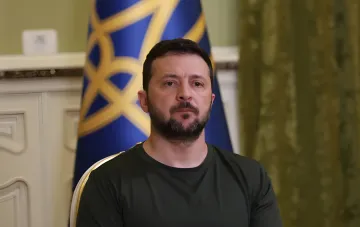
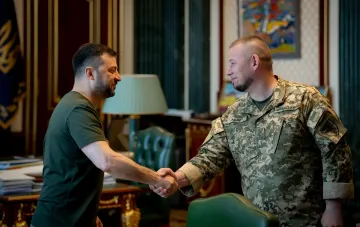
Head of the Foreign Intelligence Service of Ukraine Rustem Umerov has publicly warned representatives of the diplomatic corps and Kyiv's partners about a new wave of messages being sent on his behalf. According to him, against the backdrop of intensified diplomatic efforts to end the Russian aggression, cases have been recorded where unknown individuals are attempting to establish contact with foreign diplomats and allies in order to gain access to classified information regarding the work of President Volodymyr Zelenskyy's team and the progress of international negotiations. Umerov wrote about this on his Facebook account, as reported by RBC-Ukraine.
The essence of the warning: social engineering disguised as an official
As the head of the Foreign Intelligence Service explained, the purpose of such messages is not simply to establish contact, but to ferret out essential details of the diplomatic process: Kyiv's positions, formats of consultations with allies, and the dynamics of international contacts. Umerov stressed that such appeals use trust in his name as an 'anchor' of legitimacy, making them particularly dangerous under conditions where diplomats and officials process a heavy daily flow of messages. In essence, this is a classic social engineering technique where an attacker masquerades as a high-ranking official to lower the recipient's vigilance.
Recommendations: do not reply and verify via official channels
In response to this threat, Umerov gave partners clear instructions. First, do not engage in correspondence and do not transmit any information if there is even the slightest doubt about the authenticity of the contact. Second, additionally verify the phone number, account, or email address through which the message arrived. Such verification, he stated, can be conducted through official diplomatic channels, the relevant agency, or Ukrainian diplomats. Umerov directly urged: if a suspicious message is received on his behalf — do not reply and report it to the Ukrainian side.
Context: a peak of diplomatic activity surrounding the war
The warning came against the backdrop of a marked increase in diplomatic activity. It was previously reported that the United States and Russia are discussing their own joint projects as part of peace talks to end the war. Public statements also surfaced claiming that the Russian side derailed negotiations with Norway and Finland regarding the Ukrainian settlement, while Volodymyr Zelenskyy explained why it is important to hold a meeting in Abu Dhabi prior to talks between the US, China, and Russia. It is precisely at such a moment, when diplomatic traffic surges sharply, that attempts at outside interference in communications become most sought-after and, consequently, most dangerous.
Significance of the signal for Kyiv's partners
The public warning from the head of the Foreign Intelligence Service serves a dual function. On the one hand, it is an operational security signal for diplomatic missions and partner agencies: do not trust incoming contacts 'on behalf of Umerov' without verification. On the other hand, it demonstrates that the Ukrainian side is monitoring attempts at external influence on the negotiation process and is informing allies in advance about the methods that could be used against their own communications. For diplomats in practice, this means one simple algorithm: any message containing a request for classified information and arriving on behalf of a high-ranking Ukrainian official must be verified through official channels before any response is given.