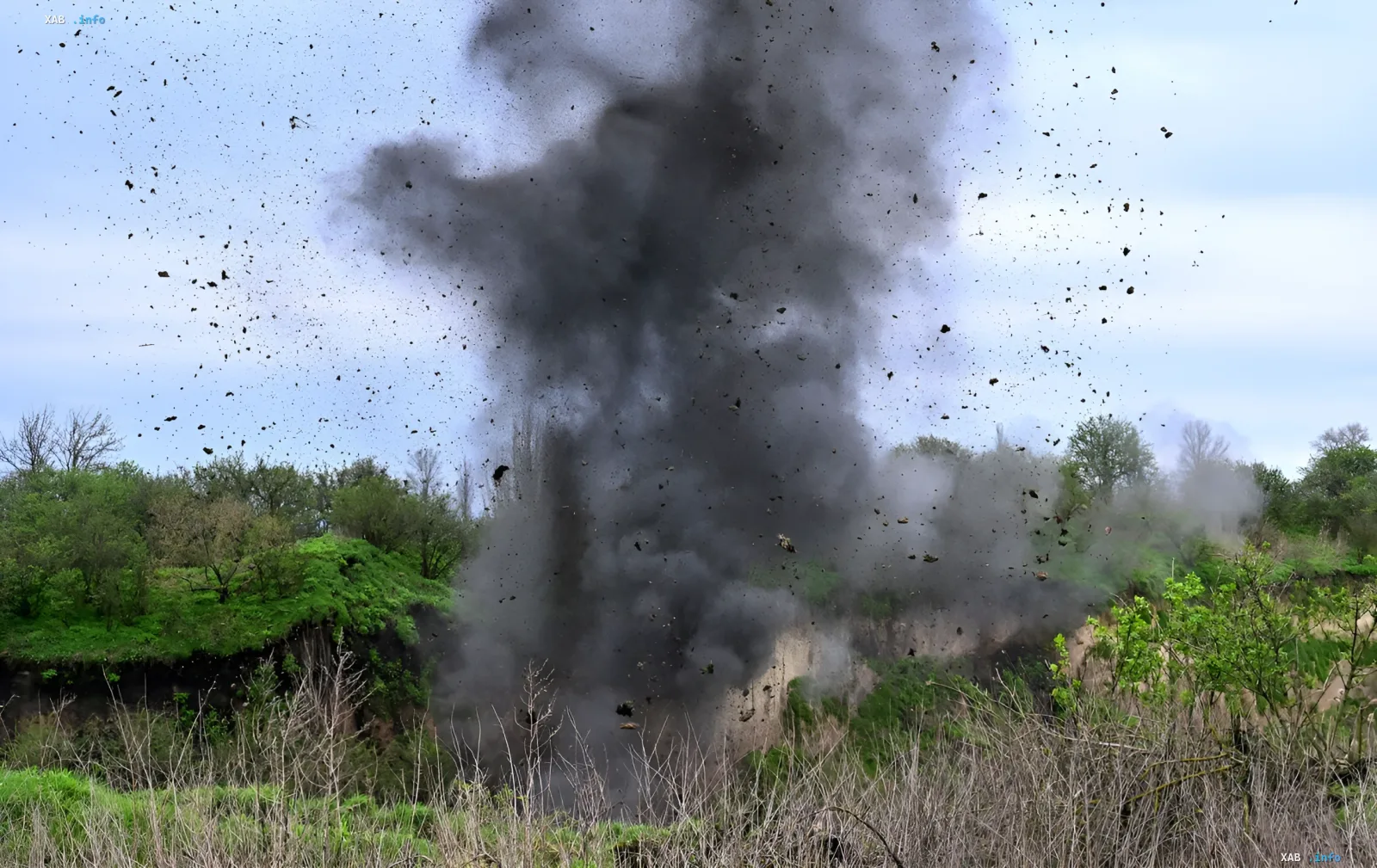
On September 17, a massive controlled blast was scheduled at the Korettsk granite deposit in the Zhadkivka starostin district of Rivne Oblast. According to RBC-Ukraine, citing a statement from the Korettsk city council, mining and dressing work was to continue throughout the day — from 10:00 to 18:00. The deposit is located approximately five kilometers southwest of the city of Korettsk, which is why residents of the surrounding areas were within the zone of possible acoustic impact.
How residents were informed about the work
To inform residents, the client enterprise planning the work intended to use three types of sound signals, which were to indicate the start and nature of the blasting operations. The Korettsk city council urged residents of the community, first and foremost those of the Zhadkivka starostin district, to take this information into account and remain calm, as the rumble and vibration during the specified time interval are a normal consequence of industrial activity and not an emergency.
Context: explosions in western regions of Ukraine
It is important to distinguish planned industrial work from military incidents previously recorded in the same region. A reminder of them is relevant: on September 12, explosions were also heard in western regions of Ukraine, but they were linked to Russian aggression. At that time, the occupiers attacked Rivne Oblast, as a result of which one of the enterprises in Sarny district was damaged; according to available data, no one was injured as a result of the strike.
Strikes on Zhytomyr Oblast on the same day
On September 12, Russian forces also carried out a series of strikes on Zhytomyr Oblast. In Zvyahel, two people died as a result of a hit on a grocery store; in addition, an enterprise and gas stations were damaged, with fires breaking out. These events underscore how critical it is for residents of western regions to promptly distinguish the nature of loud explosions — industrial or military.
Why it is important to distinguish the nature of explosions
The combination of planned blasting work at quarries and ongoing shelling makes the situation unclear for the local population: loud sounds and clouds of dust may be perceived as a signal of an attack. This is precisely why local self-government bodies record the work schedule and notify residents in advance through official channels, in order to reduce anxiety and avoid panic in the settlements adjacent to the deposit.