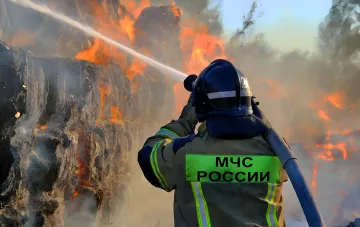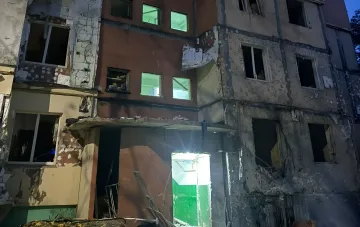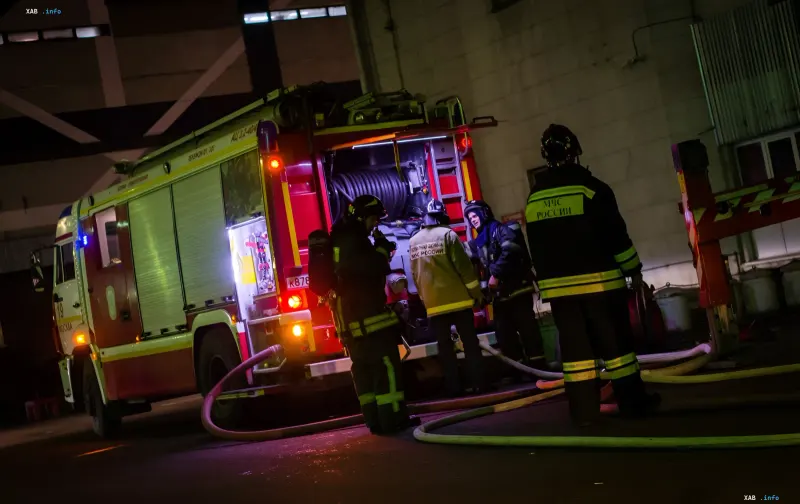
On the night of October 18, drones launched a massive attack on Moscow, St. Petersburg, and the Leningrad Region. According to the Exilenova+ monitoring channel, cited by RBC-Ukraine, an oil fuel terminal was likely hit during the attack, causing a fuel tank to catch fire. The Russian air defense system, according to the same sources, operated intensively with recorded missile launches.
Official Data on Shot-Down Drones
Leningrad Region Governor Alexander Drozdenko reported 57 downed drones. According to him, in the village of Nizina, Lomonosov District, debris damaged four parked cars, triggering a fire. Moscow Mayor Sergei Sobyanin, who had been reporting on intercepted drones since 11:00 PM, stated by 3:00 AM that 87 drones had been downed. He reported no damage or casualties, noting only that emergency services were operating at the debris impact sites. Explosions were also reported in the Moscow region.
Airport Restrictions and Notification Failures
Due to the attack, Rosaviatsiya restricted aircraft arrivals and departures at two Moscow airports and St. Petersburg's Pulkovo. Meanwhile, residents of St. Petersburg did not receive SMS alerts regarding the drone threat, and some received them with a significant delay.
Context: Series of Nighttime Strikes on the Capital
Moscow has been targeted by massive drone attacks for several nights in a row. On the night of October 14, according to the Defense Forces, hundreds of drones were directed at the capital in one of the largest-scale attacks. On October 16, due to a strike by about 50 drones, restrictions were simultaneously introduced at four Moscow hub airports: Sheremetyevo, Vnukovo, Domodedovo, and Zhukovsky. The following night, three of them halted operations again, although Sobyanin did not report any drone threats at the time.