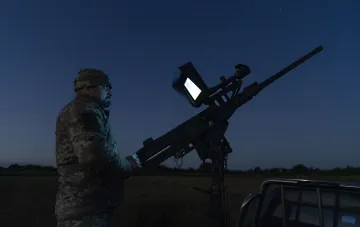

On the night of September 13, 2026, Russia launched a large-scale aerial attack on Ukraine, covering several regions at once, including the western oblasts. According to data compiled by RBC-Ukraine, air defense forces shot down most of the enemy drones, but at least 13 impacts were recorded on the ground. In several regions, the air alert did not cease for days, while emergency services operated in an intensified mode, dealing with the aftermath of both new strikes and previous ones. Below is a summary of the confirmed consequences as of the morning of September 13, by region.
Repeated Strike on Kyiv Oblast and Aftermath in Boryspil
Kyiv Oblast came under a repeated attack. In the Boryspil district, rescuers dealt with the consequences of new strikes: the enemy again hit a logistics warehouse, where firefighting had continued as late as the previous day. The operation involved not only State Emergency Service (SES) units but also firefighters from Boryspil International Airport; at the time of publication, operations were still ongoing at the site. Meanwhile, in a high-rise building damaged by Russia's morning attack the day before, rescuers discovered the body of another person during search-and-rescue operations — thus, the number of fatalities from that strike rose to two.
Odesa: Rising Death Toll and New Night Strikes
According to Odesa Regional Military Administration head Serhiy Lysak, two people were killed in the strike on a 25-story building, and 26 more were injured, including one child. Emergency rescue work in this building had been completed. However, at night Russian forces attacked the city again: a high-rise building, private homes, a car, two educational institutions, and infrastructure facilities were damaged. Specialists were still assessing the consequences of the night strike at the time of the summary, and the air alert in the region continued.
Kharkiv, Chernihiv and Frontline Areas
In Kharkiv Oblast, confirmed by the head of the regional state administration, three people were injured in Russia's attacks: in Staryi Salt, a 73-year-old woman was wounded, and a 68-year-old local resident was diagnosed with an acute stress reaction; drones attacked the Saltivka and Kyiv districts of Kharkiv. In Chernihiv Oblast, where the air alert had not ceased for over a day, one man was killed and three were injured. In Horodnia, a drone strike shattered the windows of a two-story house; in Nezhin, the occupiers struck with "Geran" drones, damaging residential homes, cars, and a store; in the Baturyn hromada, a UAV attack proved fatal for a 52-year-old man from Sumy Oblast who was returning from fishing — his car was hit by drone debris, while his companion was unharmed.
Western and Central Regions Under Fire
The attacks also affected western regions: in Ivano-Frankivsk and Kalush districts, the air alert continued as of the morning of September 13, with air defense forces operating there. In Khmelnytskyi district, a fire broke out at an enterprise due to the fall of enemy drone debris on its territory; no fatalities or injuries were reported. Two districts came under attack by drones and artillery: in the Nikopol area, according to the head of the regional military administration, Oleksandr Hanzha, the district center and the Manganets hromada were hit, and a fire broke out in the Chernetschchyna hromada of Samar district.
Contradictory Data
The compiled summaries contain discrepancies that are important to keep in mind. First, for Kharkiv Oblast, the head of the regional state administration reported three injured, whereas the head of the local regional military administration, Svitlana Onyshchuk, cited a preliminary figure of one injured — the data conflict and likely reflect different stages of verification. Second, the Odesa block mentions both the aftermath of the previous day's morning strike (two killed in the 25-story building) and the consequences of the new night attack, which were still being assessed at the time of publication; these events can easily be confused when reading the summary. Third, the overall assessment of "at least 13 impacts" is a lower bound and may be revised as the assessment of the aftermath is completed. Until all authorities officially clarify the figures, the exact numbers of injured and damage in several districts remain preliminary.
As of the morning of September 13, 2026, the air alert remained in effect in several oblasts, and rescue and emergency services continued working at the strike sites. Residents were urged to remain in safe places. The summary is developing in nature, and final data on losses and damage will be clarified once search-and-rescue operations are completed.