On the night of 22 September 2026, the Armed Forces of Russia delivered one of the largest combined strikes on Ukrainian territory in recent times, simultaneously employing ballistic and cruise missiles, anti-ship systems and more than two hundred strike drones. According to the Ukrainian Air Force, as cited by RBC-Ukraine, from 18:00 on 21 September the adversary launched Oniks anti-ship missiles, Iskander-M ballistic systems, S-400 and KN-23, four Kalibr cruise missiles and eight Bandirol/Dan-T type missiles. In parallel, 212 Shahed strike UAVs, including jet-powered modifications, along with Parodia decoy drones, were directed toward Ukrainian positions.
Composition and scale of the missile-drone strike
The structure of the attack indicates an attempt to overload the adversary's air defense systems with a multi-vector assault: the simultaneous use of ballistics from different azimuths, sea-based cruise missiles and a "carpet" of drones creates a complex picture for detection and interception systems. Particular attention is drawn to the use of Oniks anti-ship missiles within the strike group, indicating an intention to hit objects in coastal zones or at logistics hubs. The presence of the S-400 in the list as a ballistic component of the strike is an atypical role for this system, which had previously been recorded in individual episodes of 40N6 use against ground targets at long range.
Main attack directions and recorded consequences
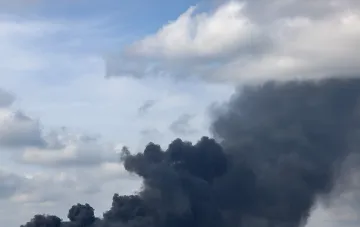
As of 08:00 on 22 September, the Ukrainian Air Force reported that the main directions of the strike fell on Dnipropetrovsk, Kirovohrad and Poltava oblasts. As a result of the attack, impacts of Russian missiles and strike UAVs were recorded at 22 locations across these regions. Debris from shot-down aerial targets was found in four additional places. A separate episode was the night attack on the Bровary district of Kyiv oblast: as a result of the strike, warehouse and utility buildings caught fire, and private houses and cars were damaged. According to preliminary data, no casualties among the civilian population had been recorded at the time of publication, although the extent of material damage is being clarified.
Air defense performance
The repelling of the massive attack was carried out by aviation, air defense missile units, electronic warfare and unmanned systems units, as well as mobile fire groups of the Ukrainian Defense Forces. According to official data, by 08:00 air defense had shot down or suppressed 186 aerial targets. Among them were one Kalibr cruise missile, eight Bandirol/Dan-T missiles and 177 Shahed, Herber and other types of UAVs. Thus, a significant portion of the launched drones was intercepted or suppressed, however some targets reached their designated coordinates, as confirmed by the recorded impacts at 22 points.
Contradictory data
When comparing information from various sources, discrepancies in quantitative figures are identified. In particular, the publication voennoedelo.com reports in its headline about "nearly 300 drones in one night," whereas the Ukrainian Air Force cites 212 Shahed strike UAVs plus Parodia decoys. The difference is likely explained by the fact that the "nearly 300" figure includes all types of drones, including decoys and support UAVs, while 212 refers strictly to strike Shaheds. In addition, during the same period, separate episodes of air defense activity were recorded in the area of Kazachya Bay in Sevastopol (Crimea): according to life.ru, two aerial targets were shot down, while news.mail.ru reports four. These incidents occur on Russian territory and are not part of the strike on Ukraine, however their simultaneous mention in news feeds may create a false impression of a single event. The number of targets shot down in Sevastopol also differs between the two sources (2 versus 4), which requires additional verification.
Context and significance of the event
The massive combined strike on the night of 22 September continues the trend of increasing the intensity of missile-drone attacks, characteristic of the current stage of the conflict. The simultaneous use of ballistics, cruise missiles and hundreds of drones poses to air defense the task of simultaneously intercepting targets at different altitudes, ranges and speeds. The recorded impacts at 22 locations, against a total of 186 shot-down targets, indicate that despite the high interception effectiveness, some means of destruction are breaking through the defense. The situation in Dnipropetrovsk, Kirovohrad and Poltava oblasts, as well as in the Bровary district of Kyiv oblast, remains tense; emergency services continue to work at the sites of debris falls and strike consequences.