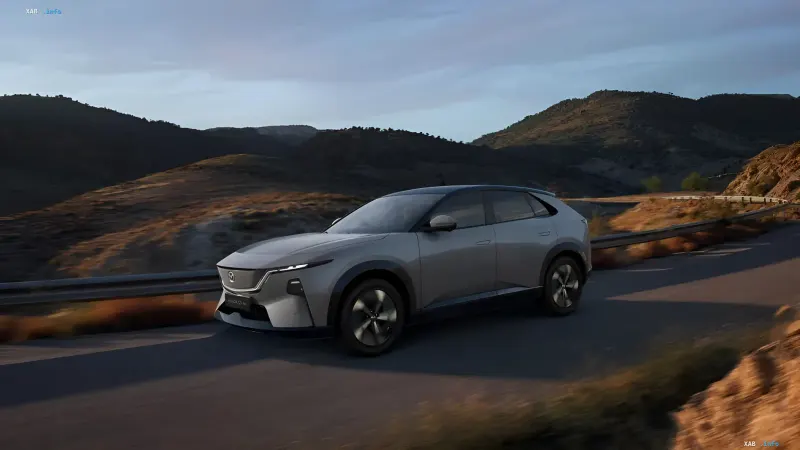
Japanese automaker Mazda has officially announced plans to further deepen its collaboration with China’s Changan Automobile. Building on the success of the Mazda 6e and CX-6e models, the Japanese corporation is considering the launch of two additional all-electric vehicles based on Chinese platforms. These new models are expected to hit the market in 2027–2028, marking a significant step in Mazda's transformation during the era of global electrification.
Strategic Importance of the Partnership
Mazda Australia Managing Director Vinesh Bhindi highlighted that the strategic importance of the alliance with Changan has grown significantly in recent months. Mazda, which has had a presence in China for nearly two decades, actively utilizes production facilities in Nanjing. The Japanese side maintains rigorous quality control, with experts from the Frankfurt-based European division tuning the suspension, handling, and overall driving dynamics. Final testing is conducted in Australia's challenging road conditions to ensure the products meet the brand's stringent standards.Potential New Models: From Crossovers to Flagships
Market analysts suggest that Mazda may focus on two key segments. The first could be a compact crossover based on the Deepal S05 platform, positioning it below the current CX-6e. The second option is a large three-row electric crossover. This task is more complex, as Changan currently lacks a production-ready pure electric model in that class, and the existing Deepal S09 would require significant re-engineering to replace its gasoline range-extender with a full electric drivetrain.Contradictory Data
There is a divergence in market expectations regarding the pace of Mazda's electrification. On one hand, the rapid surge in BEV demand in Australia (reaching 24.9% of the market by August 2026) is pushing the company toward a faster transition. On the other hand, Mazda's official stance remains conservative; the company states it has no plans to completely abandon internal combustion engines. Management argues that limitations in charging infrastructure and the reality of long-distance driving make combustion engines a more viable and efficient solution for many consumers.