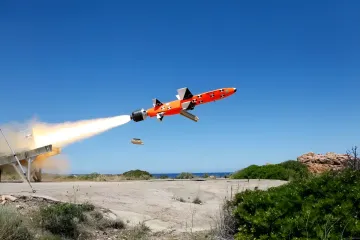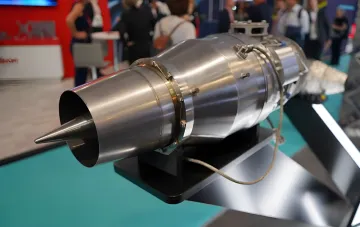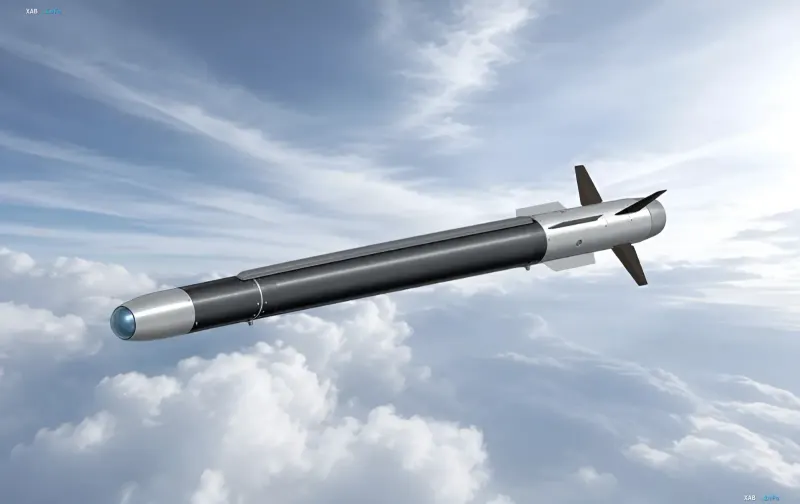
European missile conglomerate MBDA and the Polish research institute WITU have announced a strategic partnership to develop the Counter Mass Interceptor (CMI) — a supersonic interceptor designed to engage swarms of suicide drones, reconnaissance UAVs, helicopters, and cruise missiles. The project is positioned as an affordable solution that can be produced in large volumes to counter mass attacks by disposable unmanned aerial vehicles. The developers' key idea is to narrow the cost gap between a cheap drone attack and an expensive interceptor missile, which today is often economically unfeasible for shooting down a single drone.
Timeline: From Farnborough to Field Trials
The CMI project was first presented to the public at the Farnborough Airshow in July 2026. In September 2026, WITU and MBDA jointly completed a series of field trials at a range in Poland, during which the seeker head was tested against a number of representative targets, including various types of drones. The successful completion of these trials, according to the parties, paves the way for the next stage — integrating the seeker head into a missile prototype developed by WITU. The companies plan to reach the first launch tests in 2027.
Technical Specifications and Development Stages
The CMI interceptor is supersonic and, by design, is capable of engaging targets at ranges and altitudes exceeding 6 kilometers, relying on proven technologies from MBDA and WITU. At the current stage, the project is in the integration phase: the field-tested seeker head is to be mounted on a missile prototype of Polish design. Reaching launch tests in 2027 is a stated goal, not a confirmed fact, so the actual combat characteristics will only be verified after a series of launches.
Geopolitical Context: Northgate, PILICA+, and NAREW
The partnership is built on a broader memorandum of understanding between WITU and MBDA, signed at the MSPO 2026 exhibition in Kielce. The document provides for cooperation in missile research with the support of the governments of the United Kingdom and Poland under the defense cooperation defined by the Northgate Treaty. The CMI agreement was signed precisely at this exhibition, where, reportedly, the Ukrainian air-defense missile "Koral" was also shown for the first time on a launch mount installed on a Tatra truck chassis.
Positions of the Parties
Chris Allam, head of MBDA's UK division, stated that the cooperation demonstrates the company's commitment to Poland and complements support for the country's multi-layered air defense system against the backdrop of increased deliveries under the PILICA+ program and unprecedented technology transfer under NAREW. WITU's head, Colonel Pawel Svekley, added that the project allows combining a fully Polish missile design with a modern seeker head, and that alongside the HYDIS project the institute is building close relations with MBDA in developing key European missile solutions. The parties describe the goal as creating a fully Polish sovereign solution for Poland and a timely, affordable European capability for the armies of allies.
The Broader Context of Poland's Air Defense
The announcement of the MBDA–WITU cooperation coincided with intensified discussion of Poland's air defense as a whole. Following the 36th Ramstein-format meeting, Poland announced preparations for a new aid package for Ukraine worth 50 million euros, part of which will be directed to air-defense systems. Previously, the Polish side had stated its intention to join the production of missiles for Patriot systems in cooperation with the United States and Ukraine. In this context, the CMI is seen as an element of multi-layered defense, aimed at the most numerous and cheapest segment of threats — drones.