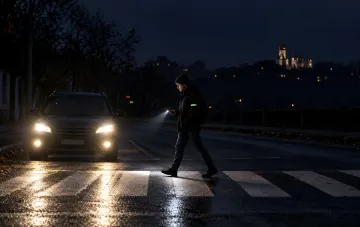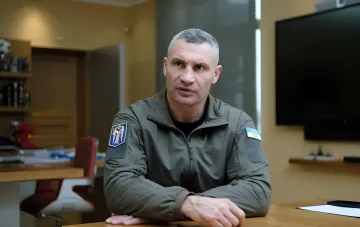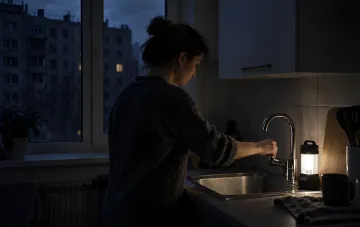
Prolonged power, water, and heating outages, which have become a regular occurrence in Ukraine against the backdrop of the ongoing war, affect not only domestic comfort but also the physical and psychological health of citizens. In November 2026, specialists from the Health Department of the Kyiv City State Administration (KCSA) reminded the public of this by publishing a summary of ten basic recommendations on their official Facebook page. According to them, advance preparation, adherence to simple safety rules, and mindfulness toward one's own well-being allow for surviving multi-day blackouts with minimal health risks. Similar appeals for proactive preparation are voiced in other regions: in Odesa, for example, local authorities and healthcare workers recommend maintaining a supply of drinking water at a rate of 3–4 liters per person per day, as well as non-perishable food and charged power sources.
Who is at risk and why preparation must be individual
The KCSA Health Department separately highlighted categories of the population for whom multi-day absences of light, water, or heating pose an increased threat. These include people with chronic diseases—diabetes mellitus, cardiovascular pathologies, bronchial asthma—as well as young children and elderly citizens. It is these groups, in the opinion of medics, that require special attention: they need to be provided with necessary conditions and support from loved ones in advance. Specialists emphasize that the lack of electricity directly affects the operation of pumping equipment and water supply, meaning that even a healthy person can face a shortage of drinking water, and vulnerable categories can face dehydration, which they are not always able to identify and verbalize in time.
Medicine, water, and food: the three pillars of a home supply
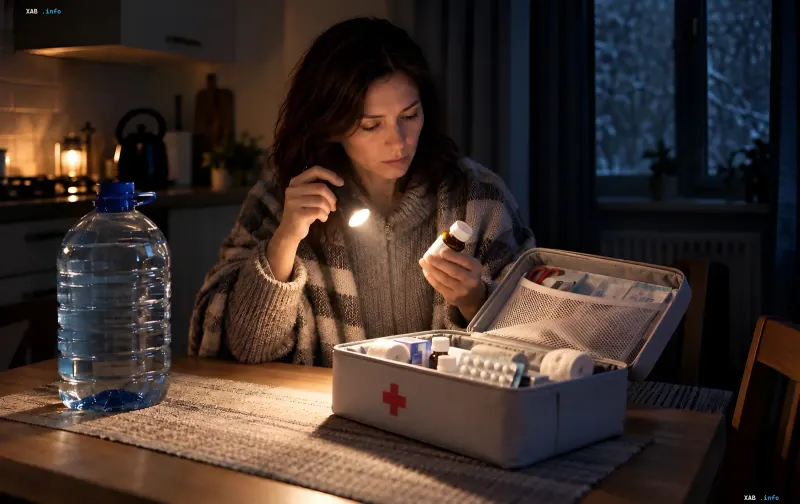
The first and, according to Kyiv doctors, key piece of advice is to form a supply of necessary medications before the next blackout occurs. This is especially critical for patients with chronic conditions who require insulin, antihypertensive drugs, inhalers, and other supplies, the storage of which often requires a cool environment. The second pillar is water. Power outages paralyze pumping stations, so there must always be a supply of drinking water in the house. The third is food that does not require special storage conditions: canned goods, grains, dried fruits. Medics remind that food in a non-working refrigerator quickly becomes unsafe, and one cannot rely on it during a multi-day blackout. In Odesa, these same recommendations are supplemented with advice to download offline maps to a phone and save important contacts in advance so as not to be left without orientation in case of a communication breakdown.
Hypothermia and carbon monoxide: two major winter threats
Prolonged absence of heating in the cold season, as warned by the KCSA Health Department, can lead to hypothermia, especially in children, older people, and patients with chronic diseases. If severe hypothermia is suspected, specialists strongly recommend calling emergency medical services. A separate block of warnings is devoted to the improper use of alternative power and heating sources—generators, stoves, heaters. "Carbon monoxide has no color or smell, so a person may not notice its accumulation in a room," the medics state. This makes ventilation and control of generator operation not just a household convenience, but a matter of life safety. The SES, in its recommendations for the winter of 2026, also emphasizes that fuel for generators should be stored away from living quarters, and the generator itself should only be operated outdoors or in a well-ventilated garage.
Sleep, anxiety, and physical activity: what is not seen but breaks health
A less obvious but no less important consequence of blackouts is sleep disturbance. Changing the usual daily routine, the noise of a working generator, the cold in the apartment, and the constant consumption of alarming news lead to chronic sleep deprivation, which exacerbates fatigue, irritability, and lowers concentration. If sleep problems last for a long time, affect daily life, and are accompanied by constant fatigue or anxiety, experts advise consulting a family doctor. In parallel, medics point to the risk of reduced physical activity: prolonged staying in a cold room without the possibility of engaging in usual activities worsens general well-being, the function of the cardiovascular system, and muscle tone. At the same time, one can maintain physical activity even without electricity—simple exercises, walking, stretching are sufficient. People with chronic diseases should coordinate the level of physical load with a doctor, and intense workouts are contraindicated in case of an acute condition, high fever, or sudden deterioration of well-being.
Control of chronic diseases: the main rule is not to lose contact with a doctor
Concluding the summary, the KCSA Health Department emphasizes: in the presence of chronic diseases, it is critically important not to lose control over their progression even in conditions of multi-day communication outages. This means not missing appointments, replenishing the supply of medicine in time, recording blood pressure, blood sugar, and body temperature indicators, and seeking medical help if they worsen. In conditions where some medical institutions operate in a limited mode, pre-saved contacts of a family doctor and emergency services become no less important than a supply of water and food. As Kyiv medics summarize, a combination of advance preparation, simple safety rules, and mindfulness towards oneself and loved ones allows for significantly reducing the risks posed by prolonged power, water, and heating outages.