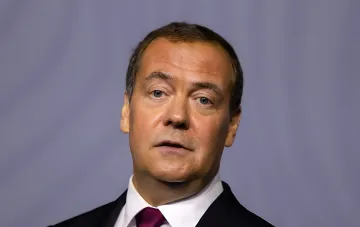
Dmitry Medvedev, Deputy Chairman of the Russian Security Council and chairman of the United Russia party, publicly denied preparations for a new wave of mobilization in Russia this autumn. In his words, the reports circulating in society and in Ukrainian media about an upcoming conscription are a "false provocation by the Kyiv authorities," which, in his assessment, is suffering a "severe shortage of human resources." Medvedev emphasized that the needs of the armed forces are "fully met by contract soldiers and volunteers," whom he called "true patriots of Russia," and stated that "there is no need for mobilization whatsoever."
Link to the electoral period
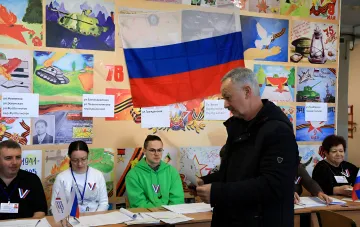
A separate emphasis in the Russian Security Council deputy chairman's remarks was placed on the timing: he linked the surge in rumors about conscription to the approaching State Duma elections. In his claim, "the enemy is trying to use the electoral period to weaken the country from within," split society, and "hinder the achievement of the goals of the special operation." Medvedev referred to recent statements by Vladimir Putin, who also rejected plans to carry out mobilization, and declared that he would reiterate this position: the rumors, in his phrasing, are the result of "persistent disinformation and stinking fake news," which, he said, are actively used to destabilize the situation inside Russia.
Contradictory data
The position of the Kremlin and United Russia that there will be no mobilization directly contradicts a number of facts recorded on the ground and in open sources. On the one hand, Russian officials consistently deny preparations for conscription and explain any mention of it as information pressure from Kyiv. On the other hand, ahead of Medvedev's statements, it was reported that Russian men were mass-receiving "mobilization orders" at military commissariats — documents that allow for the urgent summoning of hundreds of thousands of reservists to assembly points. A separate case was recorded in which a reservist was unable to leave the country: the decision to restrict his departure was made by the military commissariat. Thus, the public rhetoric of "there will be no mobilization" coexists with practical steps that observers interpret as preparation for a possible conscription.
Assessments and context
As noted in the materials, a possible mobilization in Russia is expected this autumn, which, according to a number of observers, is evidenced by intelligence data from several countries, while the Kremlin systematically denies these plans. It is precisely this discrepancy between the official line and field signals that makes the topic of mobilization one of the most sensitive in the Russian information space ahead of the State Duma elections. Medvedev's statement, therefore, should be viewed not only as a political signal but also as an element of pre-election rhetoric aimed at stabilizing public mood and shifting responsibility for the "rumors" onto the external side of the conflict.
What this means
For the reader, the key point is not so much the denial itself as its framing: the Kremlin and United Russia are preemptively closing the discussion on conscription by classifying any such discussions as an enemy provocation. At the same time, practical indicators — orders at military commissariats and travel restrictions — continue to appear. As long as these two sets of signals do not align, the topic of mobilization will remain an instrument of both internal mobilizing rhetoric and a subject for fact-checking and intelligence assessments.