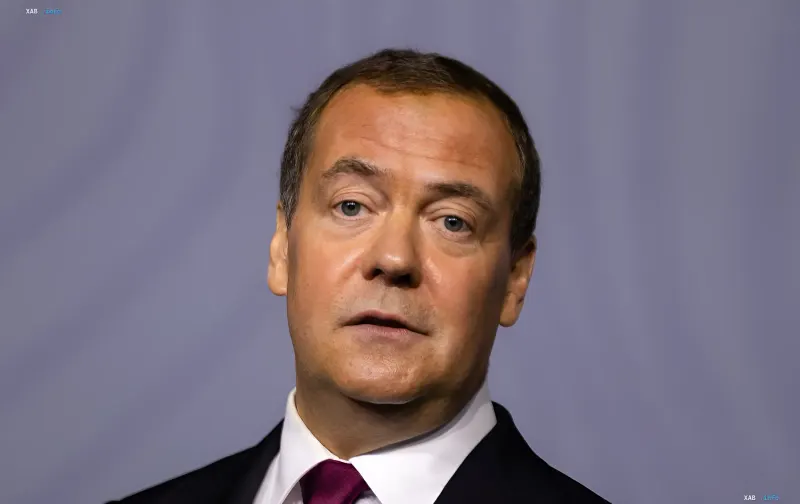
Deputy Chairman of the Security Council of the Russian Federation Dmitry Medvedev has voiced another list of harsh conditions that Moscow considers mandatory to achieve the so-called "sustainable peace" and a political settlement of the conflict with Ukraine. This statement was made during a special interview with Iran's state radio and television and was actively disseminated by Russian mass media in early October 2026.
Moscow's Key Conditions
According to the Russian politician, the conditions for a settlement remain unchanged and are divided into several fundamental blocks. First of all, it concerns enshrining a neutral, non-aligned, and non-nuclear status for the Ukrainian state. Medvedev named Kiev's rejection of what he characterized as a "nationalist course," as well as the mandatory lifting of any restrictions and bans on the Russian language and elements of Russian culture in Ukraine, as the second key point.
Territorial Claims and Threats
The third and most radical demand is the territorial issue. Moscow insists on the official transfer under its jurisdiction of those regions that have already been included in the text of the Constitution of the Russian Federation, including the territories of Donbass, as well as the Kherson and Zaporozhye regions. If the Ukrainian side refuses to accept these conditions on a voluntary basis, the high-ranking Russian official openly threatened to continue hostilities until the stated goals are fully achieved by military means.
Contradictory Data
It is worth noting that the Ukrainian and international sides categorically reject any attempts to impose ultimatums, emphasizing the illegitimacy of Moscow's territorial claims and the contradiction of such demands with the norms of international law. While Russian propaganda presents these theses as the basis for long-term peace, Kiev and Western capitals view them exclusively as capitulation and an attempt to legitimize military aggression. Expert assessments regarding the parties' real readiness for dialogue also diverge drastically: skeptics point to escalation rhetoric, while some analysts see in such statements a signal of entrenched positions ahead of potential future diplomatic maneuvers.