On Tuesday, November 24, debates titled "Continuation of Sanctions Against Russia in International Sport" were held in the European Parliament building in Strasbourg. The central issue of the discussion was the International Olympic Committee's (IOC) decision to temporarily restore the rights of the Russian Olympic Committee, which effectively initiated the process of returning Russian athletes to international arenas. Prior to this decision, Russian athletes could participate in foreign competitions only as neutral participants—without a national flag, anthem, or state symbols, or as representatives of other countries. The removal of the neutral status requirement gave international federations the right to independently determine the conditions for the admission of Russians, which caused a sharp reaction in Brussels and Strasbourg.
"The Flag Symbolizes Aggression"
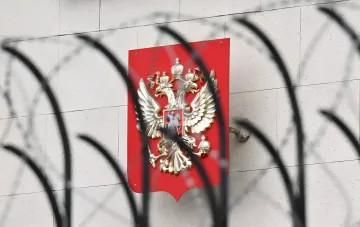
A significant number of MEPs who participated in the debate demanded that Russian state symbols not be allowed back onto global sports venues and that visa bans be imposed for Russian athletes. Polish MEP from the European People's Party Andrzej Halicki stated that the Russian flag and anthem "symbolize aggression, violence, and crimes" and urged not to allow Moscow to use sport for propaganda purposes. According to him, demonstrating acceptance of this flag would provide the Kremlin with "satisfaction" from the semblance of international recognition.
European Commission Position: The Problem Lies with the State, Not Passports
European Commissioner for Youth, Culture, and Sport Glenn Micallef emphasized that the dispute concerns not the athletes themselves and their passports, but the state and the state symbols they represent. He stated that "weaponizing sport" is unacceptable and reported that the European Commission is engaged in a dialogue with governing sports organizations, as the IOC decisions regarding Russia were made without prior consultation with them. Micallef also pointed to practical consequences: European sports organizations have faced financial difficulties because governments of several member states refuse to allocate public funds for events which they assess as "legitimizing Russian aggression."
Sanctions Package and Visa Recommendations
Within the discussion, the European Commission's position on the 22nd sanctions package was mentioned: it is proposed to include the Minister of Sport of the Russian Federation, who is also the president of the country's Olympic Committee, the presidents of the Weightlifting Federation and the Russian Chess Federation, as well as Russian businessmen linked to the sports industry. EU recommendations, according to the Commissioner, explicitly indicate that visas should not be issued to athletes competing under Russian state symbols. Micallef added that the European Commission intends to stop funding events in which official Russian representatives participate and stated that as long as the war continues, Russia's return to international sports in its usual format is inadmissible.
"Soldiers in Sports Uniforms" and Arguments About Athletes' Innocence
German socialist MEP Hannes Heide called Russian athletes "essentially soldiers in sports uniforms," arguing that their presence at international competitions creates a veneer of normality and recognition necessary for military propaganda. He reminded that Russian sports organizations and clubs, according to him, are closely tied to the army, the Ministry of Internal Affairs, and intelligence services. At the same time, a different position was voiced during the debates: a number of deputies pointed out that athletes themselves are not responsible for the actions of their government and that their return to sports should not automatically be seen as a political statement. Thus, two approaches clashed in Strasbourg—a hard line on isolating Russian state symbols and an argument that responsibility for state policy should not be transferred to individual athletes.