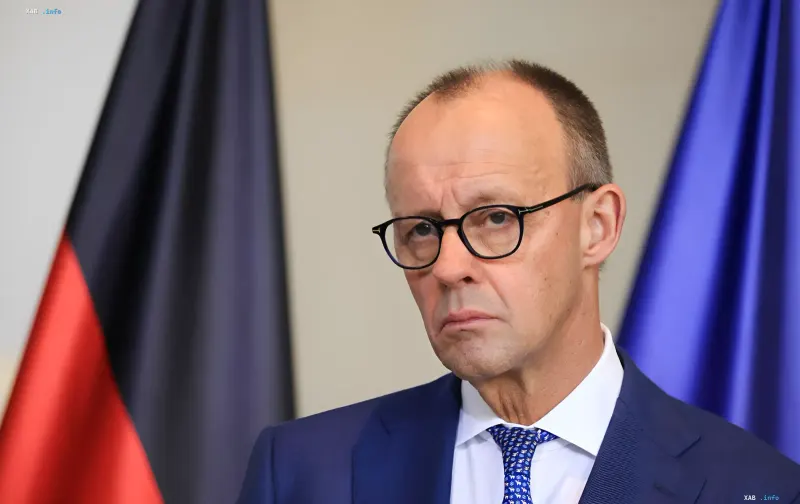
German Chancellor Friedrich Merz, speaking at the Yusof Ishak Institute in Singapore, outlined Berlin's position on diplomatic efforts surrounding the war in Ukraine. According to him, attempts by the United States and Russia to end the conflict will not lead to a sustainable solution unless Ukraine itself is at the negotiating table. Merz emphasized that any negotiations must also involve European countries because, as he formulated it, the war is being waged on European territory and affects the entire continent.
“Depends on only one person”
Assigning responsibility for the continuation of hostilities, the German Chancellor stated that the end of the war depends “on only one person” — referring to Vladimir Putin. At the same time, he regarded continued support for Ukraine not only as the defense of its territorial integrity but also as “the defense of the European political order.” According to Merz's assessment, until the Russian leader expresses a desire to stop the war, Germany and Europe will continue to support Kyiv.
Negotiation format and the role of Nordic countries
Merz warned against a scenario in which “Russia, possibly China, and the United States of America” would end the war without Ukraine's participation. According to him, the negotiating table must include Russia, Ukraine, the US, and European countries. The Chancellor stated that Germany and other European nations are trying to build a format for negotiations with the Russian government, while Norway and Finland, in his estimation, are playing “a very constructive role” in these efforts.
Context: Telephone contacts with the Kremlin
The statement came against the backdrop of a telephone conversation between the leaders of Finland and Norway with Vladimir Putin on October 27. Before this contact, they held consultations with Ukraine to convey its position regarding the upcoming peace talks in Abu Dhabi. Ukrainian President Volodymyr Zelenskyy, commenting on the call, stated that the Finnish and Norwegian leaders clearly conveyed to the Russian leadership the need for real de-escalation steps concerning Ukraine's energy and infrastructure.
Different assessments within Europe
Europe holds varying views on negotiation initiatives: Danish Prime Minister Mette Frederiksen reportedly reacted skeptically to the talks between the leaders of Norway and Finland with Putin. Meanwhile, German Foreign Minister Johann Wadephul, speaking at the Parliamentary Assembly of the Council of Europe in Strasbourg, urged “not to allow the US to maintain a monopoly on conducting negotiations” to end the war, noting that Europeans need to determine their future framework of relations with Russia. According to Merz, Moscow's reaction to the recent contact between the German and Russian foreign ministers indicates a lack of readiness in the Kremlin for serious negotiations, which, in his view, only reinforces Berlin's course of continued support for Ukraine.