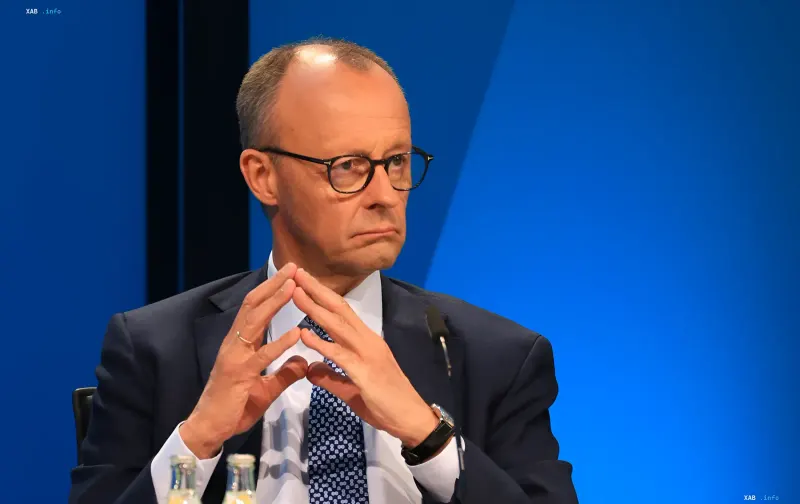
German Chancellor Friedrich Merz, on the sidelines of the European Political Community meeting in Dublin, stated that Europe could be represented at potential peace negotiations on Ukraine by five states simultaneously — Germany, France, the United Kingdom, Italy, and Poland. According to him, this is not a new mechanism, but a continuation of an already functioning cooperation format, which, as he emphasized, is "tried and tested over the years." The statement comes against the backdrop of ongoing consultations in Brussels regarding exactly who will speak on behalf of the EU at the negotiating table with Russia and Ukraine.
From the "Troika" to the "Five": how the format is structured
Merz recalled that the European Troika (E3) format is already functioning in Europe, comprising Germany, the UK, and France. It was in this composition that these countries coordinated positions on a range of international issues for several years. However, according to the Chancellor, work is also being carried out in a broader composition: "We are also partly working on this issue in a five-country format — Germany, the UK, France, Italy, and Poland. I see no problem with it remaining this way," he is quoted as saying by RBC-Ukraine. Thus, Berlin is essentially proposing to expand an existing mechanism rather than creating a new one from scratch.
No final decision reached
At the same time, Merz emphasized that a final decision on who exactly will represent the EU in negotiations has not yet been taken. European leaders had previously generally agreed that they wanted a seat at the table between Russia and Ukraine, but a specific representative or delegation for this role has not been chosen. According to reports, the EU is unlikely to make a decision on appointing a single special envoy for peace negotiations at the upcoming Dublin summit. Consultations on the possible appointment of such a representative have been underway since the beginning of 2025, but consensus among capitals has yet to be reached.
"You cannot talk about Europe without Europe"
Commenting on Moscow's position, Merz stated that he expects the Russian government and, in his words, "Russian dictator Vladimir Putin" will eventually agree to joint negotiations. The Chancellor noted that "certain positive signals" are coming from Moscow regarding involving Europe in the negotiation process. "The Russian side is increasingly ready to acknowledge that one cannot talk about Europe without Europe. And that in itself is good news. Whether this position will be maintained, we shall see. Much will now depend on the negotiations in the coming days," he said. However, Merz did not provide specific dates or formats for future contacts and limited himself to a general assessment of the dynamics.
Context: pressure on Berlin and budget disputes
The announcement of the "Big Five" came against a backdrop of internal pressure on the German government. As reported by Euronews in October 2026, Merz, leading a coalition of six major net-contributor countries, is insisting on strict austerity measures in the EU budget, while the European Commission and 17 other member states hold a different course. The German side, according to Reuters, transfers over 40 billion euros to Brussels annually and believes that the seven-year budget project proposed by the Irish presidency, exceeding 60 billion, is "beyond the means" of Berlin. In these conditions, Merz's proposal for an expanded E3 format looks like both a diplomatic initiative and a way to strengthen Germany's negotiating position within the European security architecture.