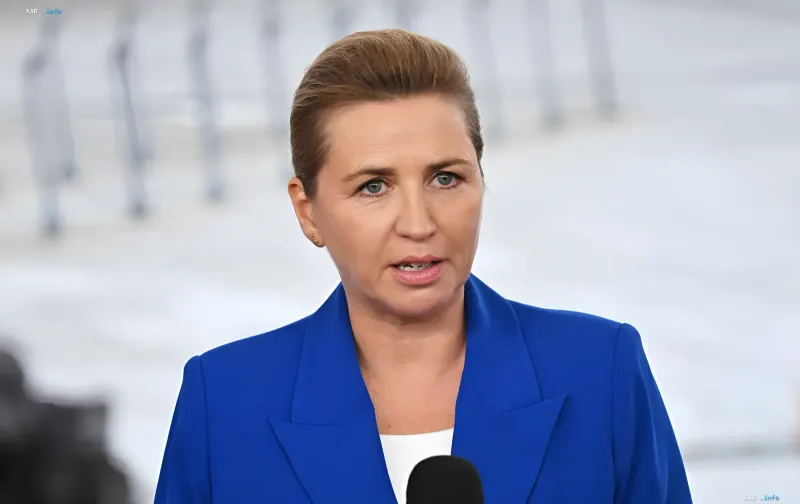
Danish Prime Minister Mette Frederiksen has directly rejected a proposal to personally represent Europe in negotiations with Russia on ending the war in Ukraine. Answering journalists' questions, the head of the Danish government stated that European institutions, rather than an individual politician, must be at the center of this work. This is reported by RBC-Ukraine, citing the Danish broadcaster DR.
Rejection of a personal negotiating role
Journalists asked Frederiksen who she believes should represent Europe in contacts with Moscow. The Prime Minister replied that the issue would be discussed that same evening and later in Dublin, emphasizing that it is extremely important for her right now to support European institutions. To a clarifying question of whether she herself would like to take on this mission, Frederiksen answered in the negative: "No. I hope to be part of Europe's voice. But our institutions must be at the center of our work."
Priority of EU institutions
The Danish Prime Minister's position indicates that Copenhagen does not view the figure of an individual leader as the optimal format for European representation. According to her logic, Europe must speak with a single voice, relying on its institutional base rather than the personal authority of a single negotiator. This approach essentially shifts the focus from personality to structure: EU institutions are the ones that should form and coordinate the continent's negotiating line.
Context: Abu Dhabi and the trilateral contact format
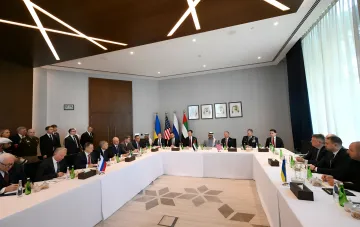
The issue of Europe's participation in the peace process escalated after the start of trilateral talks in Abu Dhabi between Ukraine, the US, and Russia. According to Bloomberg, European officials are in the city, but will join the talks only in the event of tangible progress. At the same time, Europe insists on consistency: Russia must first stop the war, and only then can the parties discuss the continent's security architecture. Thus, the European side maintains a rigid framework of conditions and is not ready to enter the format until the actual situation on the battlefield changes.
Zelenskyy's deadline and Meloni's initiative
Who exactly will speak on behalf of Europe should become known in the near future. According to Ukrainian President Volodymyr Zelenskyy, Europe must decide on its representative for peace talks by the end of November. The head of state emphasized that the role of Europeans in this process is critically important, as they are the ones who will provide Ukraine with security guarantees and participate in reconstruction. Earlier, Italian Prime Minister Giorgia Meloni also raised the issue of European representation, urging the EU to clearly define who is authorized to negotiate on behalf of the Union and with what powers, pointing out that a multiplicity of negotiators in various formats undermines the EU's credibility.
Zelenskyy's visit to Denmark and support for Kyiv
Frederiksen's statements came against the backdrop of Zelenskyy's visit to Denmark, where he met with the Prime Minister. During this visit, it was noted that Copenhagen will transfer 645 million euros to Kyiv as support. The combination of these signals — from rejecting a personal role and focusing on institutions to the deadline for choosing a representative — shows that Europe is building its negotiating architecture centrally, but without haste, while maintaining a connection to the military realities of the conflict.