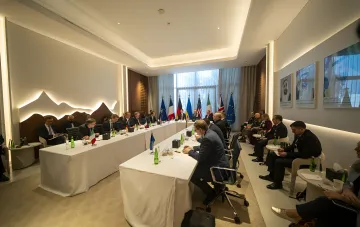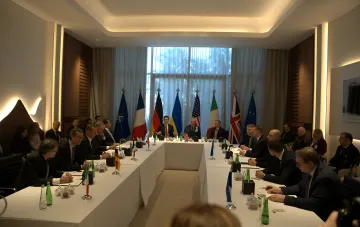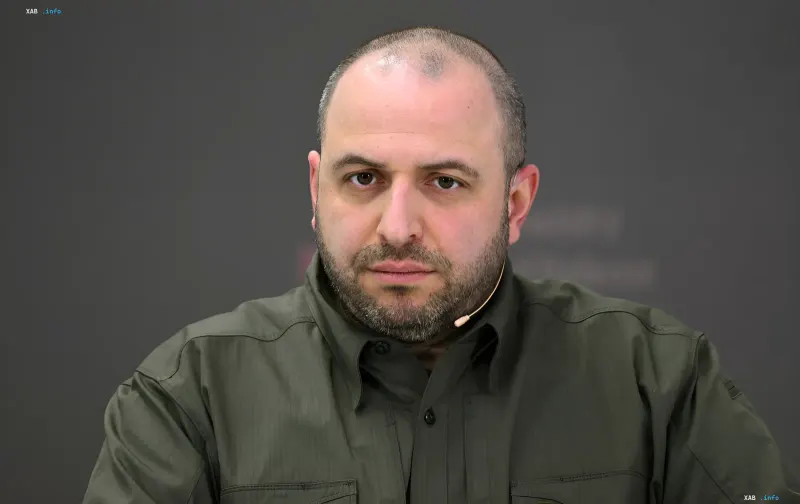
The two-day trilateral negotiations between Ukraine, the US, and Russia in Abu Dhabi, focused on ending the war, have concluded with a key agreement: the parties have finalized terms for a major prisoner-of-war exchange. This was announced on his Telegram channel by the head of the Foreign Intelligence Service of Ukraine, Rustem Umerov, while summarizing the second day of negotiations, which began on the morning of November 11.
Prisoner exchange as the first practical result
According to Umerov, the main achievement of the trilateral meetings was the agreement on a large-scale prisoner exchange. "We are currently working on coordinating the details and practical implementation," he clarified. The official emphasized that the return of Ukrainian prisoners of war home remains one of the state's top priorities. Thus, the exchange of hostages and POWs has become the first concrete step recorded in the aftermath of the negotiations, although its logistics and volume are not yet being publicly disclosed.
Agenda: Peace, security guarantees, and post-war reconstruction
The Ukraine-US-Russia trilateral format also discussed issues regarding achieving peace and post-war reconstruction. Umerov recalled that the first step toward peace must be the cessation of hostilities and the provision of security guarantees for Ukraine. By his assessment, over the two days, the parties were able to directly set out their positions; however, significant disagreements on a number of key issues remain. "There is still a lot of difficult work ahead, but opportunities for continuing the negotiation process exist," the head of the Foreign Intelligence Service assured.
Format and progress of negotiations
The first day of negotiations in Abu Dhabi ended after more than four hours of work. The second day began on the morning of November 11. According to several reports, European representatives were not present in the trilateral format; after the conclusion of the meeting with the American and Russian delegations, the Ukrainian side held a separate discussion with European partners. The negotiations were conducted in Russian, which, according to reports, was noted by observers.
Washington's position: Productivity without excessive optimism
US Secretary of State Marco Rubio called the talks "very productive" but cautioned against excessive optimism regarding the timing of reaching a final agreement. Rubio also stressed that in the future, European representatives should be present at the negotiating table, as their participation is deemed necessary for the sustainability of any potential peace settlement.
What comes next
At the current moment, the parties confirm their intention to continue the negotiation process. The details of the prisoner exchange — the number of participants, conditions, locations, and timelines — are currently being negotiated. Experts note that cementing even one practical step against the backdrop of persistent significant disagreements over security and territorial status could become a precedent for further de-escalation, although the path to a full peace agreement, according to all parties, remains long.