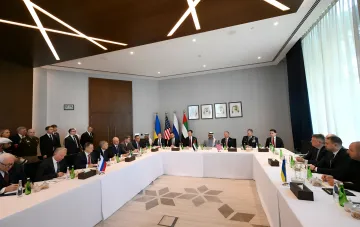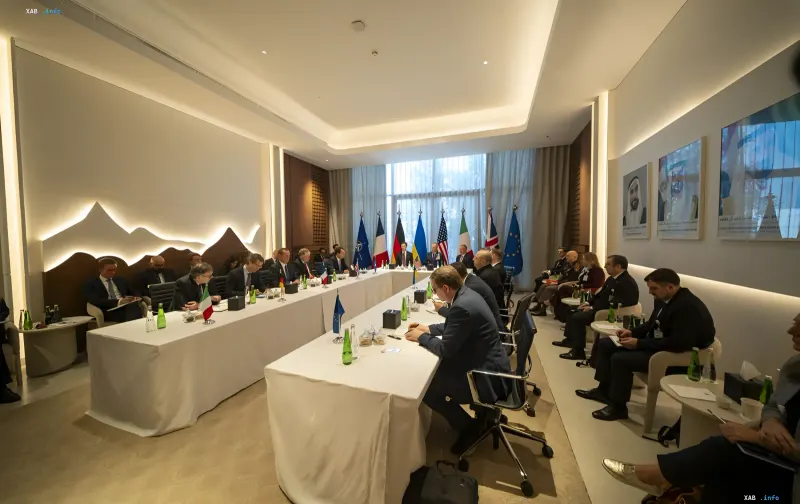
On November 10–11, 2026, two-day trilateral negotiations between delegations from Ukraine, the United States, and Russia concluded in Abu Dhabi—the first such meeting since February of this year. Following the consultations, the sides announced initial results: the key outcome was an agreement on a new large-scale prisoner-of-war exchange, the parameters of which, according to Alexander Zorin, First Deputy Head of the Information Department of the Russian General Staff, will be determined in the next two to three days. Specific timelines for the exchange, Zorin specified, could arrive within two to three weeks. Ukrainian President Volodymyr Zelenskyy, commenting on the course of the talks, called them difficult and focused on humanitarian issues, noting that "it is difficult with the Russians."
Roadmap: Moscow, Then Dublin
US Presidential Special Envoy Jared Kushner and Steve Witkoff stated they will travel to Moscow on November 12 to meet with Vladimir Putin, and afterwards to Dublin, where they will hold talks with Volodymyr Zelenskyy. David Arakhamia, a member of the Ukrainian negotiating delegation and head of the Servant of the People faction, confirmed this sequence and stated that after the visits of American mediators, the date for a new round of talks should be set. "We have good momentum to find a solution by the New Year," he emphasized, adding that inside and outside the team there is hope to complete the process by the end of 2026. Kushner, in turn, expressed hope for the success of the meeting with Putin and further progress, noting that "it would be good if they met at any time," although, according to him, Moscow wants to see more progress before holding such a summit.
Territorial Issue and Security Guarantees
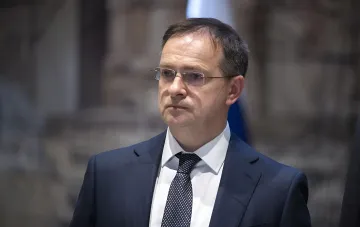
Trump’s special envoy called territorial issues the most difficult part of the negotiations and emphasized that it is impossible to implement initiatives on the post-war world order until they are resolved. "The main issue is the post-war order of the world, security guarantees for Ukraine, preventing a new war," Kushner stated. He also reported that the sides already see various components of a potential peace agreement, but must determine how to combine them into an overall structure, and that final decisions can only be made by leaders. Head of the Russian delegation Vladimir Medinsky stated that the central theme of the meetings was the European security system and that Moscow considers "correct the posing of the question of what security will be like after the end of the war in Ukraine." According to him, understanding was reached on certain issues, while on others it was not.
"No Ultimatums" and Moscow's "Strict Directives"
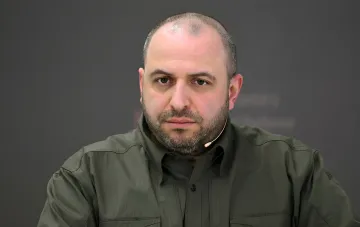
Sergiy Kyslytsya, First Deputy Head of the Office of the President of Ukraine, emphasized that no ultimatums were voiced by either side during the meetings. "I did not hear any ultimatums, neither from the US, nor from Europe, nor from Ukraine. This is very important because the media often write about ultimatums, but today and yesterday I did not hear any ultimatums," he stated. At the same time, Arakhamia characterized the talks as "tough," explaining this by the fact that the Russian side brought "very strict directives where there is no room for bargaining." Head of the Office of the President Kyrylo Budanov refused to disclose whether Moscow insisted on the withdrawal of Ukrainian troops from Donbas: "The issue raised during negotiations is the issue of negotiations. Only the result matters."
Europe’s Role: Divergence in Assessments
The presence of EU and NATO representatives in Abu Dhabi was one of the discussed aspects of the meeting. Kushner stated that their participation was "important and useful," emphasizing: "We must have Europe at the negotiating table." At the same time, he noted that Europe should designate a single representative to participate in the talks, as it unites different countries with different views. Supreme Allied Commander Europe General Alexus Grynkewich announced "significant progress in the trilateral dialogue between the armed forces." However, Vladimir Medinsky reported that the Russian delegation did not communicate with the European representatives present in Abu Dhabi because Moscow "does not understand their status." Thus, the assessment of the effectiveness of European participation in the process diverges between the American and Russian sides.
Winter Vulnerability and Kyiv’s Expectations
David Arakhamia specifically noted that Ukraine this year is particularly vulnerable to the winter period due to a shortage of interceptor missiles. At the same time, according to him, the country knows how to survive the winter, and the team hopes to complete the negotiation process before the New Year. US Secretary of State Marco Rubio called the talks "very productive," but stressed that much work still lies ahead. According to Reuters, Rubio also indicated that the goal at a certain stage is to expand the trilateral talks to involve other European countries. Currently, the exact parameters of the prisoner exchange and the date of the next round of talks have not been officially announced.