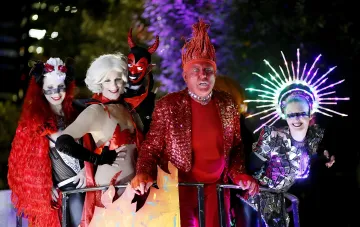
On October 31, 2026, a massive parade dedicated to the Day of the Dead (Día de Muertos) took place in Mexico City. Dancers, musicians, and participants wearing characteristic makeup, floral wreaths, masks, and feathered headdresses marched through the streets of the Mexican capital. The predominant colors in the decorations were orange, yellow, and purple. According to city authorities, about 1.6 million people turned out to watch the procession. The parade route started at the Diana the Huntress fountain and ran along Paseo de la Reforma avenue to the central Zócalo square, where festive floats and monumental figures were prepared for the spectators.
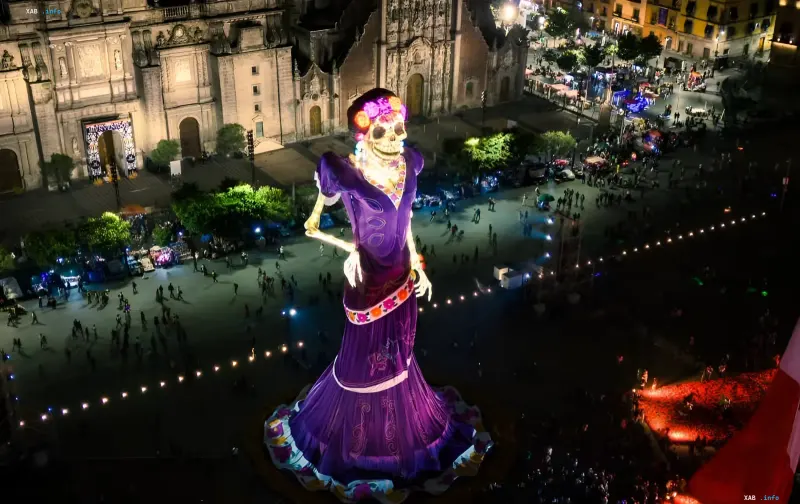
A Catrina over 33 meters tall — the main symbol of the holiday
One of the central figures of the parade once again became Catrinas — elegantly dressed female skeletons that have long turned into a recognizable visual symbol of the Day of the Dead. On the Zócalo square, a monumental Catrina over 33 meters tall was installed for the celebration. The figure became part of a large festive ofrenda — a memorial altar around which the bulk of the spectators gathered. Separate floats in the procession were dedicated to famous Mexicans: singer Juan Gabriel and director and actor Emilio Fernández. The program also included images associated with lucha libre, Mexican wrestling, which added a recognizable national flavor to the procession.
Cinematic background: From 'Spectre' to a city tradition
The large-scale capital parade has an unexpected cinematic background. The idea for it was prompted by the movie '007: Spectre', released in 2015. At the beginning of the film, James Bond finds himself among a costumed procession in the center of Mexico City. At that moment, such an annual city parade did not yet exist — the scene was completely staged. However, after the release of the film, local authorities decided to actually hold such a procession. The first procession took place in 2016, and some of the giant figures filmed for the movie were even used in it. In 2026, organizers celebrated the tenth anniversary of this city tradition, making the current parade particularly symbolic.
Spiritual meaning: Between indigenous beliefs and Catholicism
The Day of the Dead, or Día de Muertos, is dedicated to the memory of deceased loved ones. The main dates of the celebrations are November 1 and 2, although preparations and public events begin earlier. According to traditional beliefs, during this time the souls of the dead temporarily return to their families. Favorite dishes are prepared for them, photographs are placed, candles are lit, and home altars are decorated. Orange marigolds, which Mexicans call cempasúchil, are meant to help souls find their way home. The holiday is a synthesis of the beliefs of Mexico's indigenous peoples and Catholic traditions. In 2008, the celebrations practiced by the country's indigenous communities were inscribed on the UNESCO Representative List of the Intangible Cultural Heritage of Humanity.
Decade of tradition and growing interest
The decade of the parade, which replaced the cinematic episode, became an occasion for organizers to expand the scale of the event. While in 2016 the procession had a rather experimental character, by 2026 it had turned into one of the largest public events in Mexico City's calendar. The estimated figure of 1.6 million spectators announced by city authorities indicates that the parade has long outgrown the format of a local festival and become a full-fledged city holiday combining elements of street theater, musical performance, and ritual memory. Giant figures, floral floats, and the monumental Catrina at the Zócalo form a visual code that has already itself become part of the cultural landscape of the Mexican capital.