Microsoft has officially debunked reports that the company is preparing a fundamentally new Registry Editor for Windows 11. The application with a modern interface, which recently sparked a wave of discussion in tech media, turned out to be a demonstration sample created exclusively to showcase the capabilities of the experimental Microsoft.UI.Reactor technology. The company emphasized that the program is not a preview version of a future Regedit and is not intended for release as part of the operating system.
How the "new editor" appeared
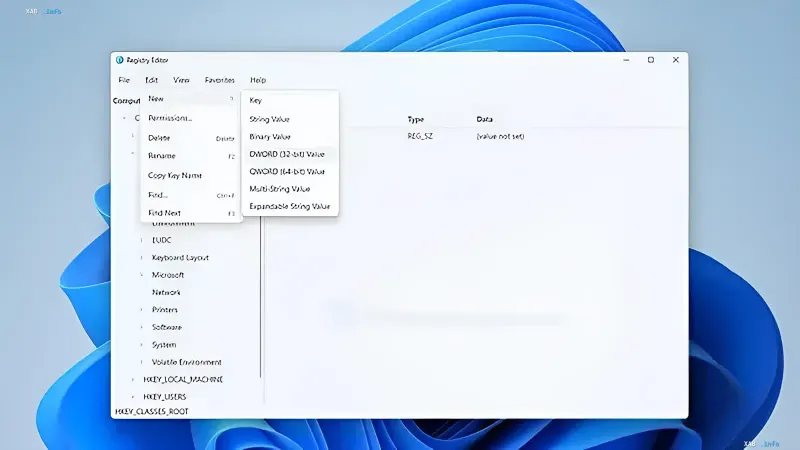
The discussion was triggered by a publication from a Windows Latest author who discovered the application in the open Microsoft.UI.Reactor repository. The program is built on the modern WinUI 3 framework and visually differs significantly from the classic Registry Editor: it has a neater, "modern" design familiar to users of next-generation Windows applications. It was this external similarity to an "updated" system tool that led some media outlets and readers to conclude that Microsoft is preparing a replacement for the aging Regedit.
What the application really is
Despite the external resemblance to a "future" system tool, the discovered sample is a demonstration application, not a product. However, the program does interact with the Windows registry: it allows users to create, rename, and delete keys, change values, and perform searches. However, a number of functions are not yet implemented or do not work fully, which is typical for a prototype created to illustrate the capabilities of the technology rather than for daily administrative work.
Microsoft's reaction: Two top executives clarify
Microsoft responded to the misinterpretation by the media at the highest level. Company Vice President Scott Hanselman pointed out that the prototype was presented as a new registry editor, although it was strictly a demonstration application. The head of the Windows Insider program and corporate vice president, Marcus Ash, further clarified that the discovered sample is not a preview version of an updated Regedit. Thus, the company's position is clear: there is no "new registry editor" preparing for release in the upcoming Windows 11 builds.
Will there ever be a new Regedit?
At the same time, Microsoft has not abandoned the idea of modernizing old system tools. According to Windows Central, the registry editor is on the list of components that may be updated as part of the Windows K2 initiative, which aims to bring legacy utilities to a modern standard. However, at the moment, the team has more priority tasks, so the timing of a possible update has not been determined. Furthermore, the company noted that the future interface would not necessarily look like the demonstration sample found in the open repository.
The bottom line for Windows 11 users is simple: there is no reason for "premature excitement" over a new registry editor. The discovered application is a training rig for Microsoft.UI.Reactor technology, not a product. A real replacement for Regedit, if it ever happens, will appear as part of the Windows K2 initiative and will likely look different from the found prototype.