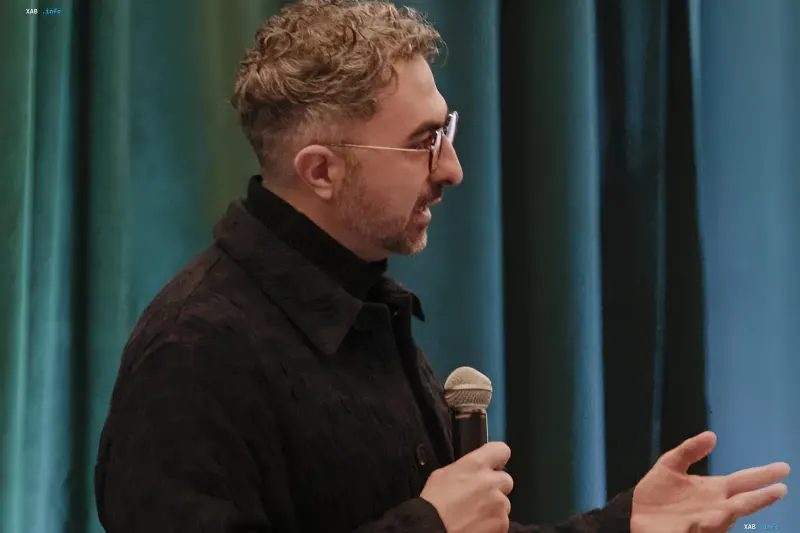
Microsoft has announced the development of a new pre-trained foundational AI model, MAI-Base-2, which the company claims is more powerful than the model powering OpenAI's GPT-5.6. The statement was made by Mustafa Suleyman, head of the corporation's AI division, during an all-hands employee meeting. According to him, training MAI-Base-2 used only a quarter of the computational resources that Microsoft estimates OpenAI required. The announcement comes amid a noticeable cooling of relations between the two companies and Microsoft's shift toward developing its own models.
What Is MAI-Base-2 and How Was It Tested
The new advanced model has been named MAI-Base-2. According to the company, it was tested against OpenAI models, including a system codenamed Spud, which Microsoft states powers GPT-5.6. Suleyman claims that MAI-Base-2 showed superior results in tests evaluating AI's ability to understand and predict patterns in data. At the same time, he emphasized that the comparisons are based on technical information regarding OpenAI models that is at Microsoft's disposal.
Computational Efficiency: Four Times Less Than OpenAI
"We now have a more powerful pre-trained foundational model than the one underlying GPT-5.6, and we used only a quarter of the compute resources that OpenAI required to train it," Suleyman stated. Pre-training is the initial phase of AI model development where it identifies patterns in massive amounts of text, images, and other data; the process requires colossal and expensive computational resources. If Microsoft has indeed managed to make this stage more efficient, it will allow the company to significantly reduce development costs.
Comparison With DeepSeek
In addition to the comparison with OpenAI, Suleyman stated that MAI-Base-2 consumes 12 times fewer computational resources than models from the Chinese lab DeepSeek. He did not name the specific system for the comparison, but the company's blog clarifies that the pre-training process for MAI-Base-2 proved significantly more efficient than comparable metrics for DeepSeek-V4-Pro-Base.
Cooling Relations With OpenAI
Notably, Microsoft drew attention to the shortcomings of OpenAI's models, into which the corporation has poured billions of dollars; Microsoft's stake in the ChatGPT developer likely exceeds $100 billion. Criticizing a partner could negatively impact the value of these investments. Meanwhile, the companies share a close partnership: Microsoft provides Azure cloud platform clients with access to OpenAI models and uses them in its own products, including Copilot. Over the past year, relations have noticeably cooled as Microsoft increasingly seeks to act independently of OpenAI, including by developing its own models.
Context: Restructuring the AI Division
In March, Microsoft formed a joint team to work on commercial and consumer versions of Copilot, with Mustafa Suleyman heading the artificial intelligence development division. In this context, the presentation of MAI-Base-2 looks like a demonstration of the corporation's independent technological potential. However, all claimed power and efficiency metrics are Microsoft's own estimates and have not been confirmed by independent tests.