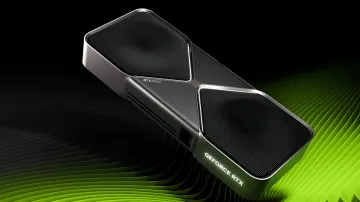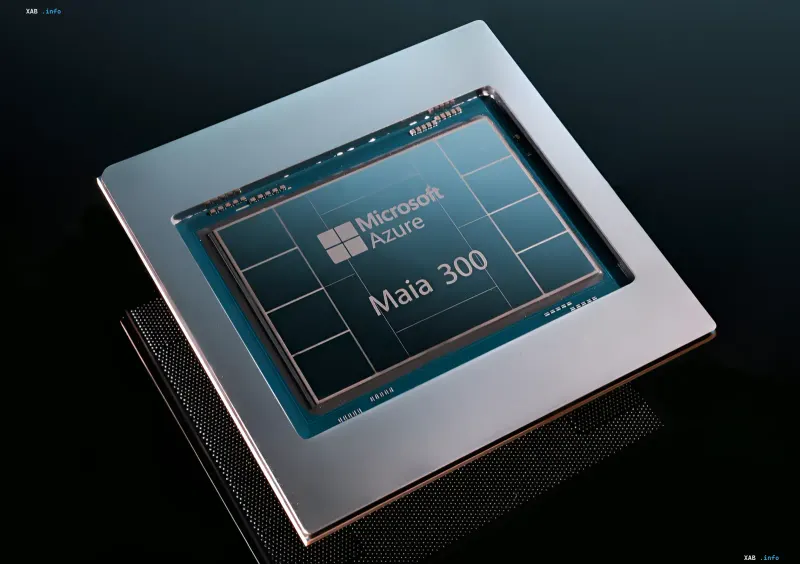
Microsoft has officially unveiled the Maia 300, the third generation of its proprietary AI accelerators. This move marks a strategic shift in the company's policy, aimed at reducing dependence on third-party GPU providers like Nvidia. According to top management, including CEO Satya Nadella, this chip will become the foundation for all future AI services of the company, providing unprecedented optimization for neural network models.
Technological Leap and Efficiency
The key advantage of the Maia 300 is its energy efficiency: according to Microsoft, the chip delivers 40% higher performance at the same power consumption compared to current Nvidia GPU solutions. The company's engineers have achieved impressive computational density: a full rack of Maia 300-based equipment demonstrates a sevenfold increase in efficiency for tasks related to processing long documents and operating autonomous AI agents.
Deployment Strategy and Partnerships
Mass deployment of infrastructure based on the Maia 300 is scheduled for 2027. It is important to note that Microsoft does not plan to provide access to these chips via cloud services to third-party clients, positioning them as an internal tool exclusively for Azure optimization. Despite the competition, the partnership with Nvidia remains in force: this week the companies announced joint initiatives, including the deployment of systems based on the latest Vera Rubin and AMD Helios architectures.
Contradictory Data
There are varying estimates in the expert community regarding the scalability of the Maia project. Evercore ISI analysts predict that by early 2027, Microsoft's chips will account for no more than 10% of the corporation's total spending on AI infrastructure. In addition, the history of previous generations (Maia 200) indicates difficulties with deployment rates: according to The Information, by the summer of 2026, systems based on Maia 200 were operating in only two US data centers, which may indicate challenges in production scaling despite TSMC's involvement.