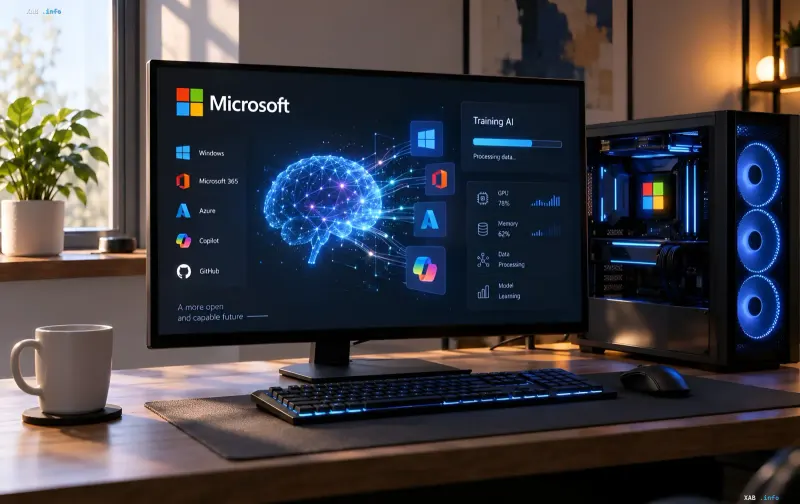
Microsoft has filed a patent application describing a system that allows idle home computers and smartphones to be used for training neural network models. This was reported citing patent office documents. The initiative covers a wide range of devices — from powerful gaming rigs to laptops and mobile phones — and the company is willing to pay rewards or provide bonuses to device owners who voluntarily connect to the system.
Distributed Training Architecture
According to the patent description, the key element of the solution is specialized software that continuously monitors the device's state and load level. This allows the system to send computing tasks exclusively during periods of downtime or minimal load without interfering with the user's daily work. Large artificial intelligence training tasks, as stated in the document, will be broken down into small micro-tasks, which are then distributed across connected devices. This approach effectively turns a dispersed base of home machines into a distributed computing network capable of complementing the capacity of corporate data centers.
Rewards for Computing Power
The patent application explicitly mentions several forms of compensation for users who agree to provide their resources. These include direct financial payments, internal bonuses for purchases in company stores, software discounts, and priority access to new AI models. At the same time, the voluntary nature of participation is emphasized: connecting a device to the system occurs solely at the owner's discretion. Currently, it has not been confirmed whether this patent application will turn into real Windows functionality, but experts note that tech giants are increasingly registering such ideas, laying the groundwork for future products.
Capacity Shortage as a Driver
The context for this initiative is created by the explosive development of generative AI, which requires colossal computing resources and has already led to shortages of graphics cards and RAM. Large companies are increasingly favoring server chips over consumer GPUs, including powerful models like NVIDIA's RTX 5090. AMD management, in turn, has publicly stated that the company is focusing primarily on the data center market. The RAM shortage has proven particularly acute: recently, OpenAI CEO Sam Altman sparked an online debate by stating that memory is more useful on AI companies' servers than in home computers, where, according to him, it sits idle most of the time.
Patent as Part of a Broader Strategy
The patent for using home devices is not an isolated move by Microsoft. In another recent patent, the company described a technology that allows changing spoken words during live broadcasts in real time and automatically synchronizing the speaker's lip movements in a new language. The combination of such applications indicates that tech giants are actively establishing intellectual property in the fields of distributed computing and multimodal AI. The patent for a "virtual farm" of home devices essentially offers a mechanism to engage existing yet unused resources for algorithm operation, which could be an answer to the growing demand for computation amid limited server hardware supplies.