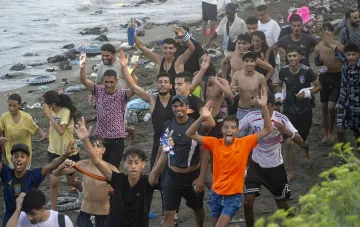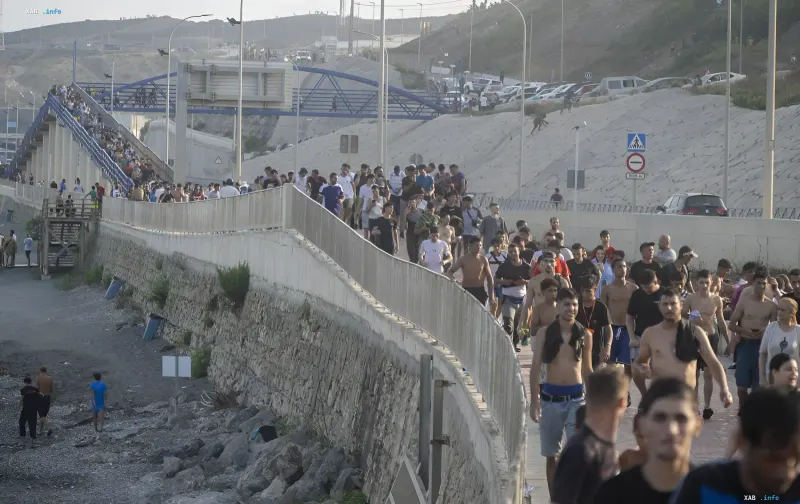
Ceuta, a Spanish enclave in North Africa, has found itself at the epicenter of an unprecedented migration crisis. In the last 24 hours, tens of thousands of people have illegally crossed the border separating Spanish territory from Morocco. Estimates suggest the number of arrivals could reach 50,000, including approximately 7,000 children and teenagers. The situation in the city has spiraled out of control, transforming into a major humanitarian and political event now being discussed at the highest levels of the European Union.
European Commission Position: "Unacceptable, but Isolated"
European Commissioner for Migration Magnus Brunner, who arrived at the scene, assessed the situation harshly. He described the situation as "unacceptable" and confirmed he is in close contact with Spanish authorities to coordinate actions. However, despite the severity of the crisis, Brussels has made it clear that the problem will remain localized.
Brunner emphasized that due to the special status of Ceuta and Melilla (another Spanish enclave), migrants have no legal route to move further into the European continent. "I repeat that there is no further movement to the European continent or other member states," the commissioner stated.
He reminded that the Schengen Code provides special rules for these territories. Border controls in effect when leaving the enclaves remain in force, effectively turning them into a buffer zone where the flow of migrants must be stopped and filtered.
Military on the Streets and Diplomatic Deadlock
The scale of the influx has forced Spanish authorities to take unprecedented measures. To regain control of the situation and maintain public order, the military has been deployed in the city. The streets of Ceuta are filled with people seeking shelter, placing a colossal strain on the infrastructure and social services of the small city.
Amidst the crisis, the European Commission welcomed "close cooperation between Spain and Morocco." Brunner noted that the key task is ensuring the rapid return of migrants to their home countries. Brussels promised to continue working with Madrid, using all available tools under the new migration and asylum rules, as well as providing support through EU agencies.
Threat to the Schengen Area
The sharp escalation of the situation in Ceuta has caused serious concern in European capitals. The Spanish enclave, being part of the Schengen Area, has become a vulnerable point through which a massive wave of people is breaking through. In this regard, leaders of several European countries have already voiced demands to temporarily suspend Spain's participation in the Schengen Area. Such a step would be an unprecedented precedent capable of radically changing the rules of the game in European migration policy.