The Ministry of Economy of Ukraine has launched a fundamentally new multi-layered system for reducing the cost of investment capital, designed to restart the economy amid ongoing wartime challenges. The core concept is based on state structures taking on the heaviest, first layer of war damage. This model is intended to encourage international and private insurance companies to safely enter subsequent risk layers and offer businesses competitive tariffs.
Risk Reduction Architecture and the First Loss Model
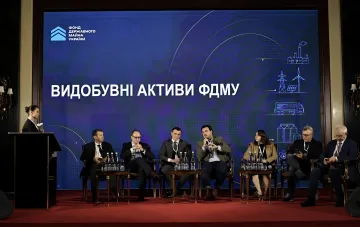
During a panel discussion at the Forbes Ukraine Economic Resilience Forum, Deputy Minister of Economy Yehor Perelyhin detailed the state's logic. The primary barrier for investors remains the physical destruction of assets being created or already in place, as noted by Dragon Capital founder and CEO Tomas Fiala. To overcome this barrier, the state is prepared to compensate for destruction during the first strike. A similar approach has already proven effective in practice: the successful experience of the 2023 grain corridor scheme, where state coverage amounted to $20 million, reduced London marine insurance rates from 4% to 0.75%, with losses over nine months recorded by only 5% of insured companies.
Credit Catalysts and Business Support
In parallel with insurance mechanisms, the Ministry of Economy is deploying credit support tools, including compensation of 5.5 percentage points of the interest rate under Resolution No. 594 for large enterprises, as well as the popular '5-7-9%' affordable loan program for small and medium-sized businesses. As Yehor Perelyhin pointed out, the state provides resources comparable to inflation, which in synergy with businesses' own investments creates a powerful impetus for infrastructure restoration. Additionally, the agency is integrating Political Risk Insurance (PRI) mechanisms combined with long-term financing from Western partners, significantly reducing the cost of raising capital for large-scale projects.
International Investment and Capital Multiplication
Practical results of the new financial architecture are already visible through leading investment players. Over the past two years, Dragon Capital has attracted about 600 million euros for twenty Ukrainian enterprises, with 70% of these funds directed toward infrastructure greenfield projects. The European Investment Bank (EIB), in turn, is unlocking over 500 million euros in portfolio guarantees for SME lending and preparing a support package for large companies worth up to 800 million euros. The successful sequencing of financial catalysts—combining insurance layers, subsidized loans, and mutual funds—makes it possible to form an attractive and competitive price for the capital needed to rebuild the country.