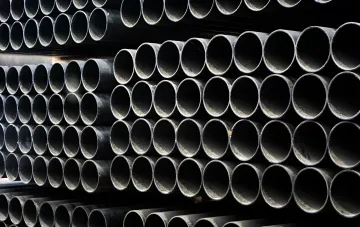
The Ministry of Economy and Environment of Ukraine has postponed for two weeks its decision on final antidumping measures regarding imports of welded non-galvanized steel pipes from Turkey. This was reported on November 6, 2026, by RBC-Ukraine, citing data from the GMK Center analytical agency. According to the source, the issue has been delayed more than once: more than a year has passed since Ukrainian producers submitted their application, yet even preliminary antidumping measures, which are usually introduced during the investigation stage to protect the domestic market, have not been applied.
Investigation Chronology and Reasons for Delay
The antidumping investigation into imports of welded non-galvanized steel pipes from Turkey was initiated in March 2026 following an application by Ukrainian pipe enterprises. Eight months have passed since then, during which the Ministry of Economy and Environment has failed to complete the procedure and issue a final decision. Oleksandr Kalenkov, President of the Ukrmetalurgprom association, commented to GMK Center, calling the situation an "inexplicable delay" and stating that the agency has effectively abstained from making decisions to protect domestic manufacturers. According to him, Ukrainian industry expects responsible and timely actions to protect its own economy rather than new postponements and "far-fetched reasons for refusal."
Eight Enterprises Face Losses: The Scale of Damage
According to GMK Center, about eight Ukrainian pipe enterprises are currently continuing to incur losses due to dumped imports from Turkey. Since 2021, the volume of Turkish pipe imports to Ukraine has tripled. Turkish products are displacing domestic goods thanks to prices that are lower than the production cost of Ukrainian plants. Each month of delay in introducing protective measures, experts estimate, leads to a loss of orders, a reduction in production volumes, and the depletion of the enterprises' resource base necessary for their subsequent recovery. Meanwhile, imported products continue to expand their share of Ukraine's domestic market.
Risk of Using Russian Raw Materials in Defense Projects
An additional risk factor highlighted by Oleksandr Kalenkov is that some Turkish steel pipe manufacturers still use Russian metallurgical raw materials. "It is terrifying to imagine that Russian steel, which fills the aggressor's treasury, could be used in pipes for anti-drone corridors and other defense facilities due to the lack of trade measures," said the head of Ukrmetalurgprom. GMK Center emphasizes that the problem extends beyond a single antidumping investigation: some products entering Ukraine from third countries may be made from Russian semi-finished products, creating a direct threat to defense infrastructure.
Turkey's Production Capacity and EU Practices
GMK Center analysts point out Turkey's significant potential to increase supplies to Ukraine: the underutilized production capacities of Turkish enterprises exceed Ukraine's steel pipe consumption fivefold. At the same time, key export markets—the United Kingdom, the United States, and the European Union—already have protective trade restrictions in place against Turkish pipe products, making Ukraine one of the few major markets where Turkish manufacturers can direct excess volumes without restrictions. In this regard, experts consider it advisable to align Ukraine's trade policy with EU practices, which allow for blocking products manufactured from raw materials originating in countries subject to sanctions or trade restrictions.
Warning of Consequences for Industry
Oleksandr Kalenkov warned that further delays in introducing antidumping measures could have broader consequences for Ukraine's metallurgical and pipe industry as a whole. According to him, the current situation demonstrates a systemic problem: the Ministry of Economy and Environment is failing to perform its function of protecting the domestic market from unfair competition. GMK Center notes that the total volume of Turkish pipe imports produced using Russian raw materials is already comparable to the annual output of an average Ukrainian pipe enterprise, making the issue of introducing protective measures not just an economic matter, but a question of the country's industrial sovereignty.