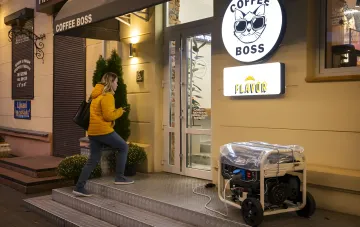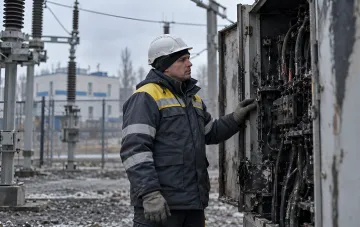
The Ministry of Energy of Ukraine has provided a detailed explanation of why power outages occur outside of approved hourly schedules. According to the agency, the main reason for sudden blackouts remains damage to energy infrastructure and power plants as a result of Russian shelling. In addition to hostilities, grid accidents can occur due to equipment operating in critical conditions or severe weather. The Ministry of Energy emphasized that the war has significantly changed the repair procedures for power engineers: every accident now requires coordination with military and rescue services, which inevitably extends restoration times.
What to Do If the Power Goes Out: From an Apartment to an Entire Entrance
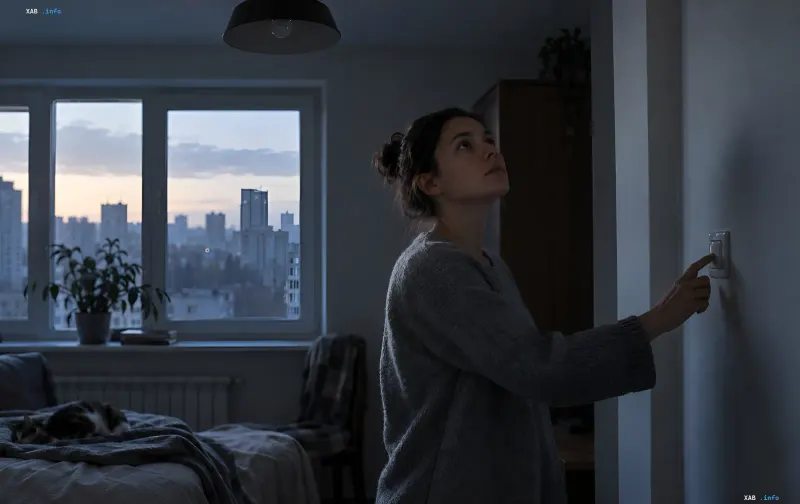
The agency recalled the basic algorithm of actions for residents. If electricity has disappeared in only one apartment, the most likely cause is a tripped circuit breaker in the electrical panel, and the problem can be resolved independently. When there is no power in the entire entrance or building, it is necessary to contact the condominium association, housing office, or management company. After a large-scale accident, special automation instantly disconnects damaged equipment to prevent a cascading system failure. Next, dispatchers of Ukrenergo and regional energy companies assess the scale of damage and form a restoration work plan.
Repairs Under Shelling: Why Crews Wait for Permission
The key difference between current conditions and peacetime is the strict safety protocol. Repair crews begin work only after receiving permission from the military and the State Emergency Service. If an accident occurred as a result of hostilities, approaching the damage site is permitted exclusively after the air raid alert is lifted. The territory is preliminarily inspected by sappers, demining is carried out if necessary, and rescuers extinguish fires and clear debris. This exact chain of approvals explains why restoration can take from several hours to several days or more, depending on the scale of destruction.
From 'Suturing' a Line to Installing New Poles: The Range of Work
The complexity of repair operations varies over a wide range. In mild cases, it is enough to 'suture' the damaged section of the line. In more difficult situations, crews install new poles, replace cables, and transformers. Before applying voltage, the installed equipment is required to undergo stability testing to prevent a re-accident. The priority facility for connection always remains critical infrastructure: hospitals, water utilities, and heating plants. Residents can find out the cause of the outage and track the status of repair work on the official website of the oblenergo, in its social media, or via the hotline.
Safety Rules During Outages and Restoration
The Ministry of Energy separately focused on simple but critically important rules. Immediately after the power goes out, it is recommended to disconnect all electrical appliances from the network — this will protect equipment from voltage surges when supply is restored. When electricity returns, it is necessary to wait 10–15 minutes and turn on appliances gradually, one by one, rather than all at once. Compliance with these measures reduces the load on the network and minimizes the risk of protective devices tripping again.
Recall that on November 2, 2026, hourly power outage schedules are in effect in Ukraine, introduced against the backdrop of ongoing strikes on energy facilities. On the same day in Kyiv, due to significant voltage fluctuations, the metro partially stopped, serving as another reminder of the fragility of the energy system in wartime conditions.