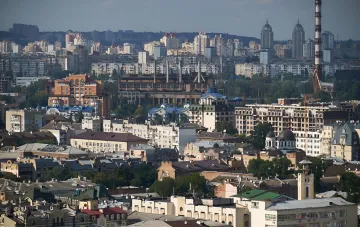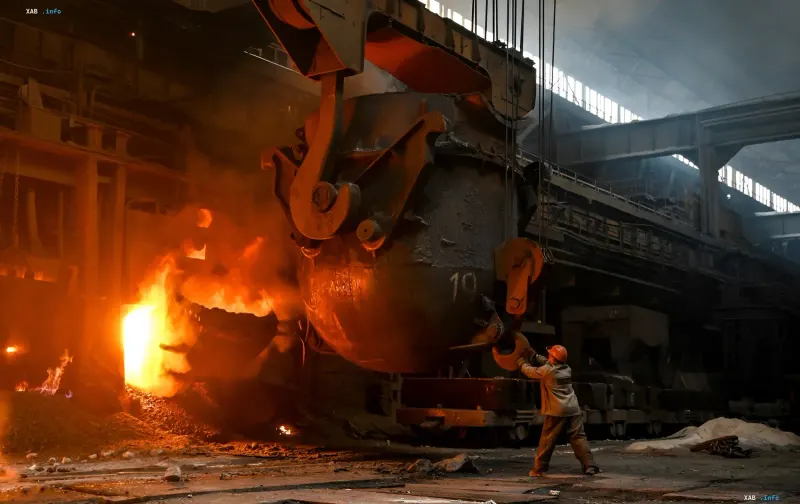
In September 2026, Ukraine's metallurgical industry faced an unprecedented and deepest crisis of the entire full-scale war. A series of destructive missile strikes on key enterprises, the ongoing blockade of sea ports, the rapid appreciation of domestic and foreign rail logistics, as well as strict trade restrictions and carbon barriers by the European Union, have led to the shutdown of plants that accounted for about 90% of all pre-war steel production in the country.
Chronology of Destruction and Shutdown of Giants
According to official reports and statements by industrial giant leadership, four of the country's largest metallurgical plants were attacked by Russian ballistic missiles in September 2026. Zaporizhstal suffered the most destruction, undergoing massive shelling several times in August and September, having withstood a total of 17 ballistic missile strikes. As a result of the attacks, eight employees were killed and 31 others sustained severe injuries.
A similar catastrophic situation has emerged at ArcelorMittal Kryvyi Rih, whose management officially announced the impossibility of safely operating the facilities until hostilities end. General Director Mauro Longobardo noted that the company is shifting its focus to preserving the remaining infrastructure and discussing future steps with the Ukrainian government. Meanwhile, Metinvest representatives stated that due to large-scale destruction, Ukraine has effectively been left without full-scale steel smelting for the first time in a century.
Economic Consequences for the State
The large-scale shutdown of the mining and metallurgical complex carries devastating consequences for Ukraine's overall macroeconomic stability. If in 2021 the GMC accounted for about 10.3% of gross domestic product, by 2023 this figure had dropped to 5.7%, and following 2026, experts predict a collapse down to near-zero values. Colossal volumes of foreign exchange earnings, tax revenues to budgets at all levels, and more than 30,000 jobs are being irretrievably lost.
Contradictory Data
While official reports from industrial associations and statements from top management, particularly Metinvest representatives, speak of a complete halt in steel smelting and the de facto cessation of Ukraine's metallurgy as an industry, independent analysts and certain specialized agencies point to the preservation of targeted activity at individual surviving processing sites. Such discrepancies in estimates are explained by the difference between the concepts of the full crude steel smelting cycle, which is indeed paralyzed, and the operation of certain auxiliary workshops trying to maintain the enterprises' viability.
Expert Analysis and Recovery Prospects
Experts agree that the restoration of Ukraine's metallurgy will require not just capital repairs of destroyed workshops, but complete technological modernization taking into account the European Union's modern environmental requirements, including carbon border adjustment mechanisms (CBAM). Without long-term security guarantees, unblocked logistical routes, and massive investments, the country risks forever losing its status as a key player in the European steel market, which will jeopardize post-war economic recovery plans.